The Architecture of Camden Place
Hidden in plain sight, learn more about the architectural secrets of this unique historic house.
A childhood in exile
Napoleon III was born Charles-Louis Napoléon Bonaparte on 20 April 1808. He was Napoléon Bonaparte’s nephew and godson. His father was King Louis of Holland (Bonaparte’s younger brother) and his mother was Bonaparte’s step daughter Hortense.
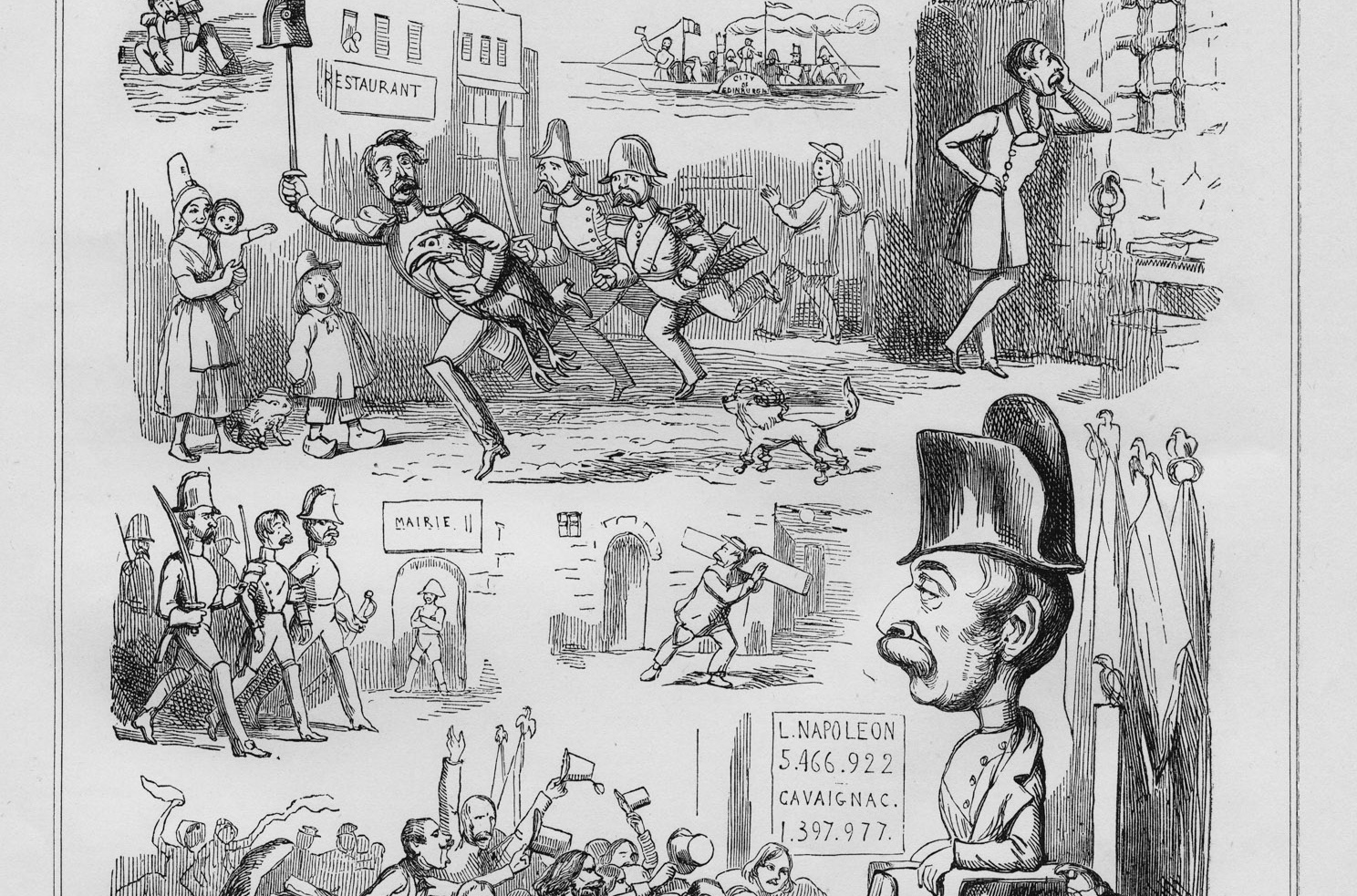

An early sketch of Louis Napoleon whilst at the Eglinton Tournament,
A childhood in exile
Louis Napoleon and his mother made their home in Switzerland after all Bonapartes were exiled following the defeat at Waterloo. He was just 7 years old. His education there meant he always spoke French with a German accent which his opponents mocked. His older brother went to live in Holland with his father and it was rumoured that King Louis was not his father.
His first military experience was as a Captain in the Swiss army (after becoming a Swiss citizen).
Louis Napoleon joined his brother and fought as a Captain with the Carbonari revolutionaries in Italy. This was a terrible decision. They both caught measles and his brother died in his arms. The Austrians issued a death warrant and Louis Napoleon escaped with the help of his mother, disguised as a footman and then an English gentleman.
His cousin dies
In 1832 his cousin, the Duke of Reichstadt and Napoleon I’s only son died of consumption. He was Napoleon ll.Louis-Napoleon now considers himself next in line for the French throne, neither his father or uncle Joseph are interested in stepping into that role.
His first use of PR
In 1832, he published the first of his own writings on political and military subjects, asserting in his tract “Rveries Politiques” – only an emperor could give France the glory and liberty it deserved.
It was his first use of propaganda and PR for political purposes
His destiny was becoming established.
A fiasco
An ambitious Louis Napoleon saw an opportunity. The July Monarchy lacked popular roots and he had seen the support for the Empire at the 10th Anniversary of his uncle’s death. He heard that a number of officers and citizens in Strasbourg were known to be Bonapartist supporters and so he planned a coup. A small group landed and walked to the garrison. He had visions of support and a triumphal march into Paris.
The coup was a fiasco! The Commander of the garrison declared Louis Napoleon was an imposter Just hours after it started it was over. The King didn’t want to make him a martyr, so he exiled him to America.
A short lived exile
News of his mother’s (Hortense) failing health reached him and he returned to Europe. With some difficulty he made it back to Switzerland to be with her. She had permission to be buried next to her own mother (Josephine) but Louis Napoleon was refused permission to travel to France. Instead he went to England, in exile.
First connection to Camden Place

Sketch of Emily by Ken Wilson
After his mother’s death the Prince Louis Napoleon takes up residence in exile in England. His inheritance means he has funds and plays an active role in the social life of London. During this time he meets a young debutante, Emily Rowles. There is talk of engagement and gifts of jewellery (possibly from his grandmother, Josephine).
As a young child Emily lived at Camden Place for 3 years. It is thought she may have been born there whilst her parents rented the house.
Napoleon leaves Emily to embark on his second, even more bizarre, coup attempt. She stays in contact with him during the resulting 5 years imprisonment at Ham but there is no longer talk of marriage. When she dies she is still in receipt of a pension from the French Civil list.
There seems to be evidence that it was Emily (not Harriet Howard) who supported Louis Napoleon financially, certainly giving him loans that helped to fund his political ambitions.
This is outlined in the article Romancing the Throne by Ilmar Goliez.
https://shs.cairn.info/publications-de-ilmar-golicz–761013?lang=en

Louis Napoleon was 32 and he thought the timing was right for a second attempt to gain power. The body of his uncle (Napoleon Bonaparte) was being returned from St Helena to Paris and the government was under fire because of its near east policy
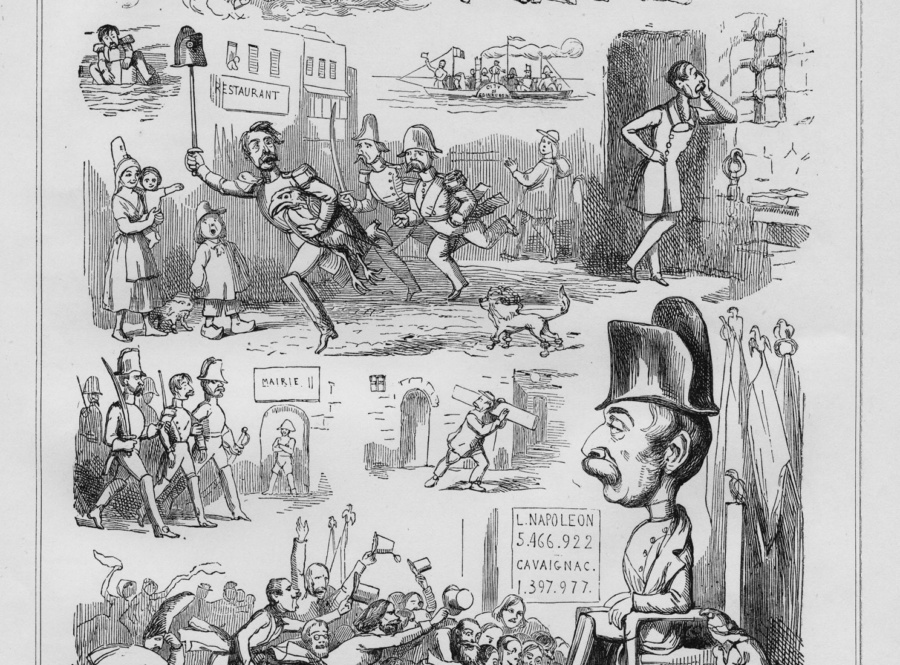
Launched from London the plan, as with his failed Strasbourg coup, was to win over the military and march on Paris. On the 6th August Louis Napoleon and a group of 50 conspirators reached Boulogne by ship on the Edinburgh Castle. Chained to the mast was a tame vulture, instead of an Imperial eagle.
This coup proved to be an even greater debacle than the first attempt. The garrison rallied, a soldier was shot and Louis Napoleon was wounded and had to be fished out of the water. Victor Hugo called him Napoleon the little. He was the laughing stock of Europe.
Following his capture the authorities sentenced him to prison in perpetuity. He was sent to the Castle of Ham. It was not an inspiring place but for 5 years he used the time to study and write. He described it as the University of Ham.
He had two illegitimate sons with the laundry maid and after 5 years he simply walked out of the castle disguised as a workman. Within days he was back in England, returning to a social life but even more convinced that his destiny was to rule France.
It was in the 40’s that Louis Napoleon, now in recipt of monies from both his father and mother’s estate, meets the actress Harriet Howard. They begin a relationship which lasts many years. It is widely believed that it was Harriet who financed much of his early political activity – certainly when he becomes President she follows him to Paris and sets up ‘home’ just behind the Tuilleries. She brings up his two illegitmate sons with her own boy.
But the latest research suggests that Prince Louis Napoleon may not have been as dependent on her as believed by the conventional wisdom and in fact Howard never had the monies needed to support him. This is an excellent example of how historical knowledge can be fundamentally changed by new research in sources which have previously been untapped.
https://shs.cairn.info/journal-napoleonica-the-journal-2022-2-page-117?lang=en
Discover Camden Place’s unique history through the people and events that shaped its story that spans more than 400 years.
