The Architecture of Camden Place
Hidden in plain sight, learn more about the architectural secrets of this unique historic house.
The billiard room was added in the 1805 changes instigated by Thompson and Anne Bonar. They added this wing to the property creating a new, magnificent dining room, albeit some distance from the kitchens.
If you visit the house make note of how many windows are on the front side of the billiard room – 1 on the inside but 3 on the outside.
Within the room there are two features of note – the heavy French doors, added by Strode, to link the old Camden sitting room to this room, thus creating a suite for the gentlemen, comprising a smoking room and billiard room.
The doors have a beautiful and early example of a metal Rococo lock.
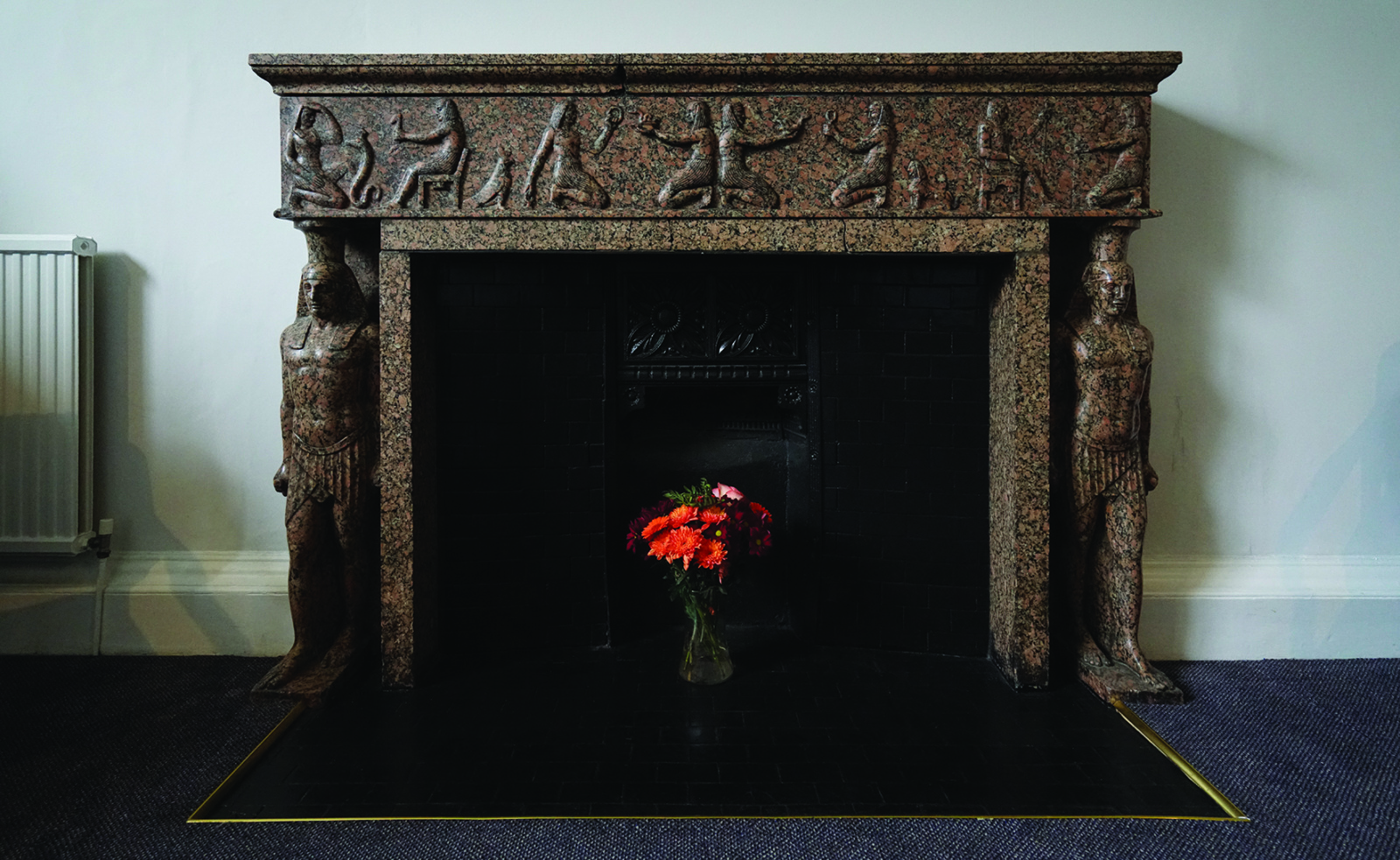
The fireplace is unusual because it is in Egyptian style, leading to suggestions that it was given to Empress Eugenie on the occasion of her opening the Suez Canal in 1869. But this is likely to be an urban myth. It is hard to explain how such a bulky architectural element could have been transported from Paris, when the Empress fled without so much as a pocket handkerchief. Nor does it explain why, if it were her property and such an important piece, it was not taken to Farnborough when she moved there.
It seems more likely that, in the 1805 creation of the dining room, the Bonars’ chose a piece that was the height of fashion – influenced by the interest in Egyptian things as a result of Napoleon Bonaparte’s actions in Africa.
The full story of the fireplace remains to be told, but it is an unusual and rare architectural embellishment. Pevsner asked the question whether this was by George Dance.
A short video by Mikael Hasler-Fry
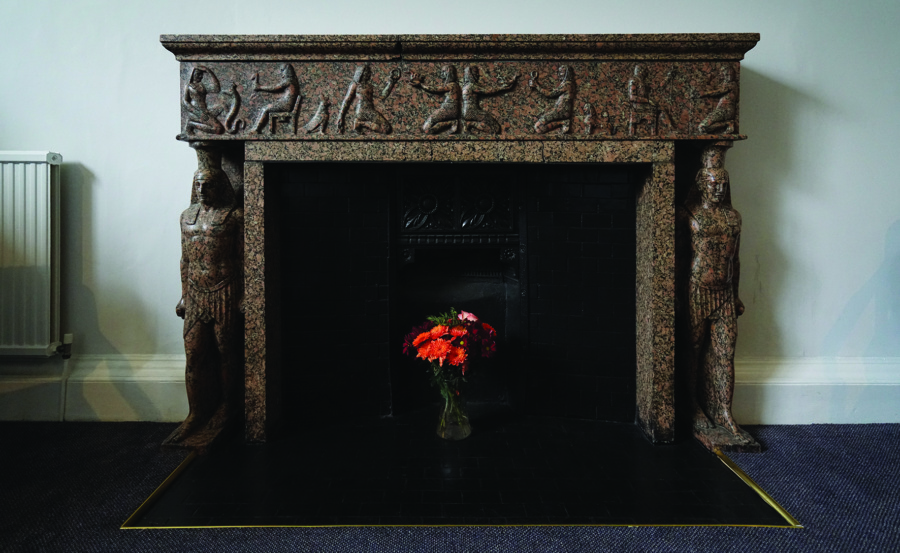
Billiard room fireplace
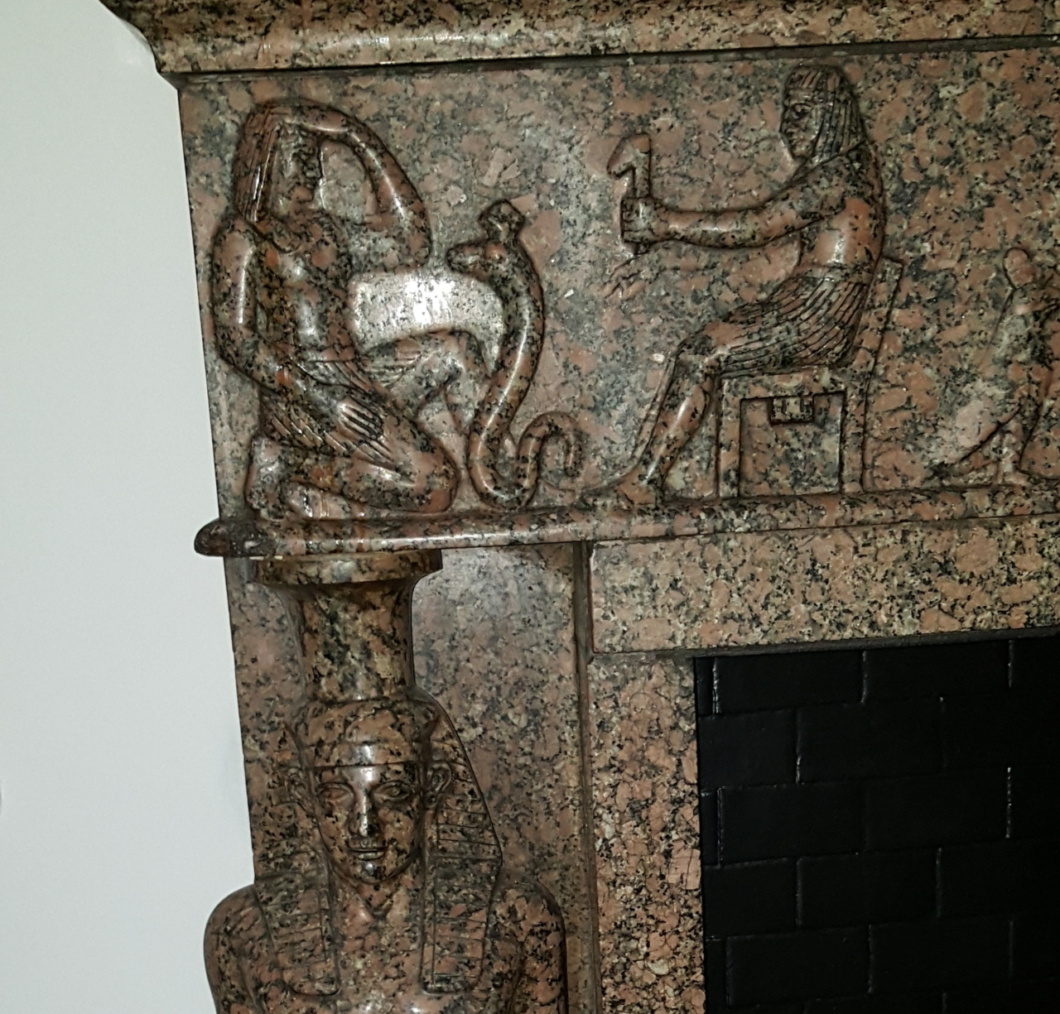
Dr. Lee Prosser described the fireplace:
‘The fireplace comprises a lintel with embellished frieze supported by two standing pharaonic figures. An inner lintel and slips have been added in similar material, presumably to provide further strength. The material is pink granite and not porphyry as has been written elsewhere. It remains to establish whether this is Scottish or Cornish granite (most likely), or Egyptian granite, which would pose many new questions. The decoration, all in Egyptian style, is nonetheless clearly 19th century in form. The frieze depicts various kneeling figures making offerings, with various small animals such as a hawk and snakes, all in a symmetrical composition. The fire grate, now only fragmentary, is 1860’s or ‘70s, with outer ceramic slips, now painted, and too small for such a grand fireplace.’
Discover Camden Place’s unique history through the people and events that shaped its story that spans more than 400 years.
