- Camden Park Rd, Chislehurst, Kent, BR7 5HJ, United Kingdom
Seeing Eugénie: An online documentary and exhibition

The last ‘studio’ image
Created in 2026 as part of our activities to commemorate the bicentenary of the Empress’s birth, this event examines how the public image of Empress Eugénie was made, circulated, attacked, and finally reconstructed as memory. This portrait was the last formal photograph of Eugénie. She commissioned it herself, deciding it would be her last formal image, it was taken before her pilgrimage to South Africa, the year after the death of the Prince Imperial.
This project brings together the historical coincidence of the Second Empire and the expansion of photography; the political management of the imperial image, the commercial circulation of Eugénie’s likeness, the explosion of caricature after 1870 and her later role in preserving and arranging the material remains of the imperial past.
Expert interviews, artefacts from our Sygrave Collection and insights about the Empress will mean by the end you can ‘see Eugénie ‘ more clearly.
Curator: Yi Lai
MFA Curating, Goldsmiths, University of London

The Empress, her portrait hangs in the Imperial Lounge at Camden Place
Seeing and Being Seen
Dr Edward Shawcross and the making of an image
From her marriage to Napoleon lll in 1853, the new Empress of the French became one of the most recognisable women of the time. Her image was carefully curated and became the face of the Second Empire, seen in portraits, on memorabilia and through the new technology medium of photography.
Here, Ed Shawcross the author of The People’s Emperor: the unlikely rise and spectacular fall of Napoleon lll’, turns his attention to the too often overlooked Empress. Listen to him tell how Napoleon chose his bride, the challenges she faced as a Spanish noblewoman and the way in which the Second Empire’s political PR expertise was used to craft the glamourous image which went global.
Seeing and being seen
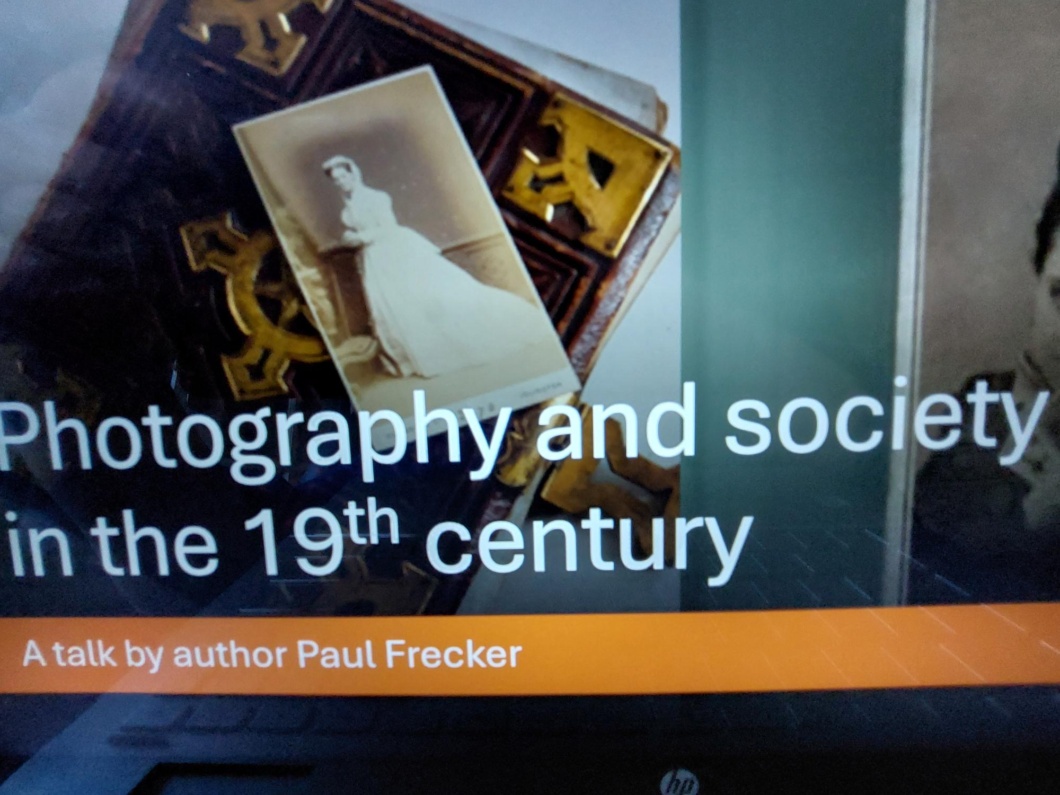
Collecting cartes de visite became a craze in England and France
Distributing Her Image
Author of 'Cartomania' Paul Frecker and the craze for 'carte de visite'.
The Second Empire coincided with a wave of pivotal technological developments with numerous inventions that transformed industries and society. Napoleon was an enthusiast of many of these developments, able to see their potential benefit for the country and the Second Empire. He embraced photography because it gave him a powerful way of connecting the people to the Imperial family and to the achievements being delivered, new schools, new railways and canals, factories and public buildings.
Sharing images also enabled the influence of the Empress on the world of fashion and couture to be shared, not just in France but globally. Photography helped her establish Paris as the cultural centre of Europe and supporting so many of its industries. From silk making to manufacturing fans, shoes, hats, dress and luggage making – employment throughout the sector boomed. In Lyon, the number of looms doubled and in Paris, thanks to the patronage of the Empress, a young craftsman Louis Vuitton created an empire of his own. Eugénie spearheaded this economic growth wearing what she termed her ‘political outfits’. At court, three changes of dress a day and never the same one twice boosted demand.
Photography showcased all these initiatives and made political PR a powerful tool.
Denis Pellerin is one photographic historian who examines the places in which Emperor Napoleon lll, Empress Eugenie, and Prince Imperial lived and the photographers for whom they posed. His 2023 book; “L’emp’reur, sa femme et le p’tit prince”: la famille impériale, la photographie et le stéréoscope” also analyzes the privileged relationship of the imperial family with photography and its use for personal and political promotion.
Another expert who has spoken at Camden Place, is Paul Frecker, historian, collector and author of “Cartomania.” Listen as Paul describes something of the history of the phenomenon, that was a “perfect storm of merchandising, consumerism and social display.” It was a fad which suited and was supported by Napoleon lll – mutually beneficial – his endorsement was a catalyst to the collectors and the cards were a perfect vehicle for sharing images of the Imperial family with the general public.
A new technology helped establish a new empire
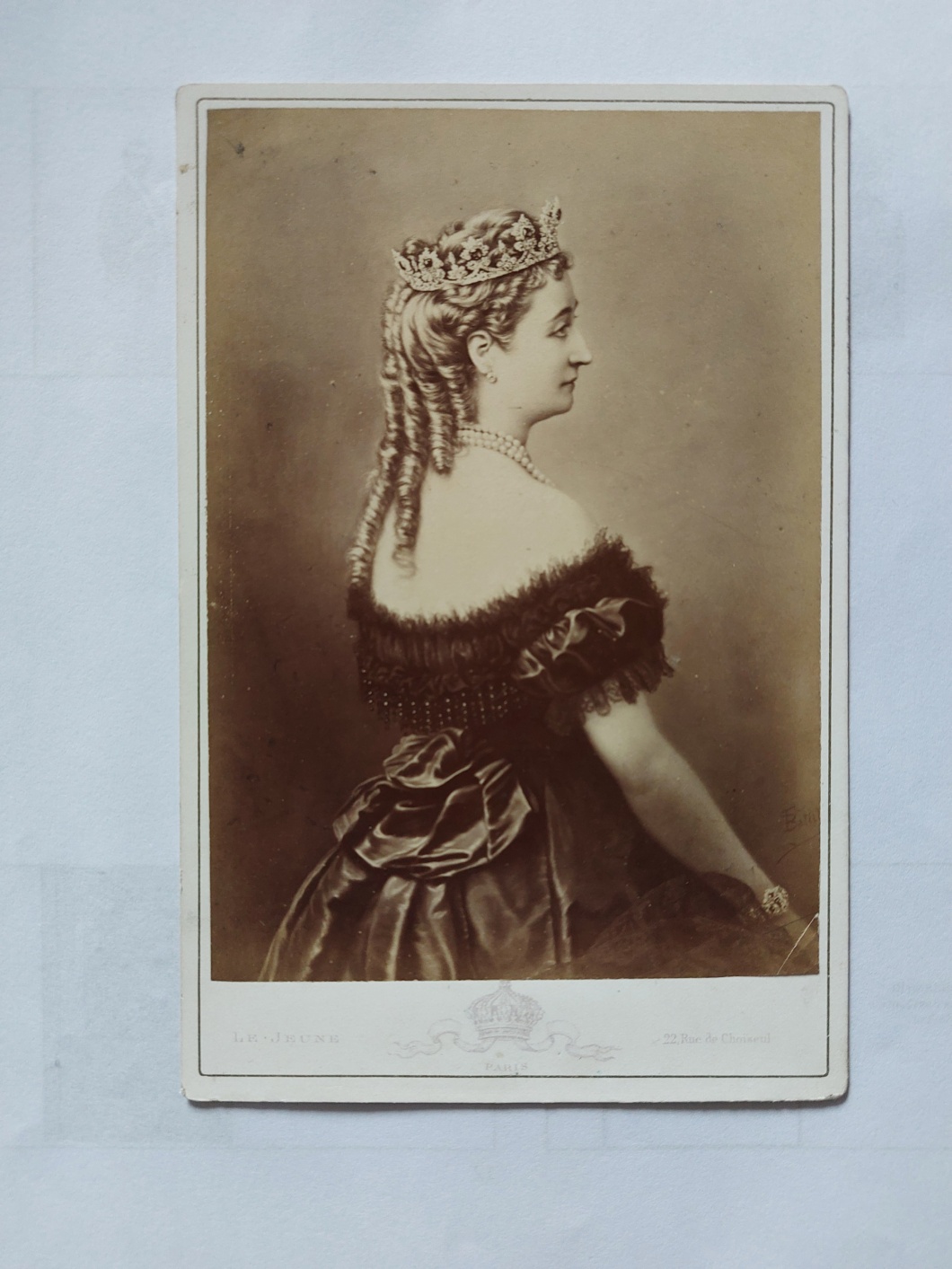
The Empress

Adam Salomon bust of the Empress at Camden Place
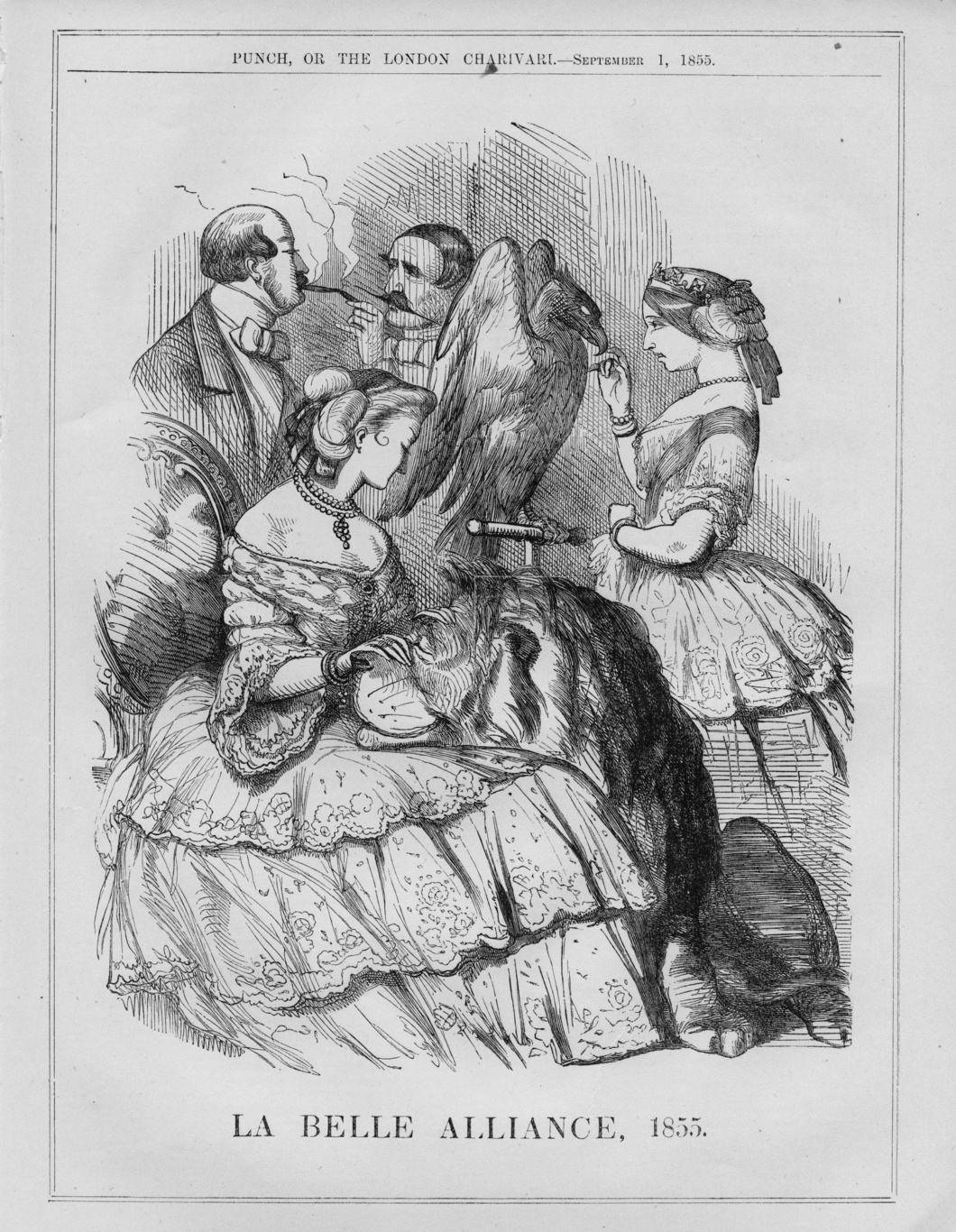
Punch cartoon capturing the 'soft power' as the Empress & Queen Victoria start a life long friendship.
Caricature and Memory
The changing faces of the Empress - historian Ian Sygrave
During the 1850’s and 1860’s images of the Empress were everywhere and on everything from purses and paperweights to magazines and shop windows. Introduced to the people of France as ‘an ornament for the crown’ Eugénie became much more. She was the cornerstone of the Empire’s soft power and as their reign progressed she became an increasing influence in politics – acting as regent on 3 occasions. Bismarck described her as ‘the only man in Paris.’
As her role changed so did her image. As she became more involved in Second Empire projects and politics she is presented less as a ‘clothes horse’ and more as serious political figure. She takes increasing control of how she is presented, commissioning her own portraits. The catastrophe of the Franco-Prussian War and the exile of the Imperial family leads to her image being ridiculed in France.
Unconstrained by censorship rules the caricaturists had a field day – Eugénie’s image is now presented in the cruelest of ways. Her Spanish heritage once more becomes an issue and there are many unfounded insinuations of her lax morals.
Join historian and Second Empire expert Ian Sygrave as he uses artefacts from our Sygrave Collection to chart the changing images of Eugénie from glamorous leader of fashion to ridiculed exiled Empress.
Showcasing a few of the artefacts from the Sygrave Collection
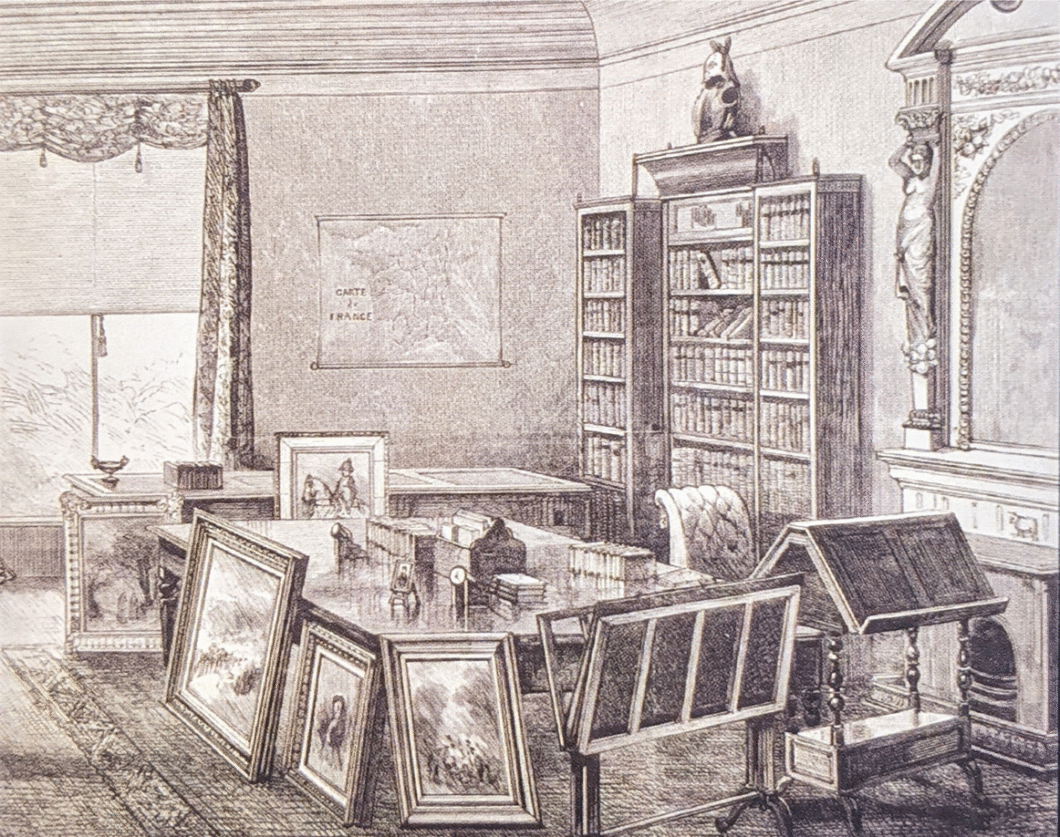
The Prince's study
Making memories
Life after 1879
The Empress was, understandably distraught by the death of her only son. When he was killed in the Zulu Wars in 1879 any prospect of a future Bonaparte ruler in France died with him. As she prepared for her pilgramage to South Africa a year after the Prince Imperal’s death, Eugénie broadcast her retirement from her public imperial persona by commissioning a last formal studio portrait. This was taken by W and D Downey in London on the 6th March 1880, shortly before her departure for Zululand on the 25th March. The copy in our collection (shown at the start of this exhibition) was given to Queen Victoria. There were of course further photographs taken of her during the remaining 40 years of her life – she died in 1920 aged 94, but never another formal portrait.
Now, Eugénie turned her attention to protecting how her family might be remembered. Her desire to build a mausaleum for her husband and son in Chislehurst, was thwarted by the lack of appropriate land. The field next to the small Catholic church was owner by a Protestant farmer who would not give permission for it to be used for a Catholic building. She was forced to look further afield and found a grand property in Farnborough Hants – closer to Windsor and her friend Queen Victoria. In 1881 she moved and founded St Michaels Abbey, within sight of her new home. At her new home, Farnborough Hill, she recreated the Prince Imperials study and did what she could to ensure the memory of the Second Empire and its many achievements were not forgotten. In 1888 the remains of her husband and son were moved to the Imperial crypt at the Abbey.
The Empress continued her life in exile in England, she still travelled frequently, including being allowed to revisit France. Her charitable work, support for women and her interests in technology and the politics of Europe continued to the end of her life.
There may have been no more formal portraits but she ensured a lasting image of a strong, caring and intelligent woman whose influence and impact deserves to be remembered.
Take a look at the artefacts in our collection
You will find more information about the Imperial family and further examples of the artefacts along with those shown here if you visit our collection.
For more examples of the caricatures review those from our collection:Collections
Search for related Empress artefacts Search Results | Historic Archive – Camden Place
Credits
This digital event involved a number of people and their contributions are much appreciated.
- Curator: Yi Lai
- Project Lead / Heritage: Angela Hatton
- Film / Digital Production: Michael Hasler-Fry
- Expert Contributors: Dr Edward Shawcross, Paul Frecker and Ian Sygrave
- With special thanks to: Dr Anna Colin
- Collection: Camden Place, Sygrave Collection