The Architecture of Camden Place
Hidden in plain sight, learn more about the architectural secrets of this unique historic house.
Once Emperor, Napoleon needed an Empress and an heir. He had many illegitimate sons, but he needed a legitmate one. He had many mistresses, including Harriet Howard, but none were suitable as consorts.

You might think finding a suitable wife would be easy for an emperor but it wasn’t. With no royal blood running in Bonaparte veins, an image as an adventurer and a reputation for chasing the ladies, most of the Royal courts of Europe turned their back on any such connections. That included Queen Victoria.
Eventually fate and an ambitious mother, brought the Emperor into renewed contact with a Spanish beauty he had admired whilst out hunting. A 26 year old, red head with the strength of character and morals to rebuff his sexual advances. Maria Eugenia Ignacia Augustina de Palafox y Kirkpatrick was born in Granada during an earthquake. Noble Spanish blood with a Scottish connection she was a fiery red head. In the end Napoleon rushed from engagement to marriage within days.
It is said she disliked sex and that side of their marriage but she gave Napoleon a legitimate son and heir. Eugénie was a real asset to the French people, but they never really took to her, or appreciated her. Certainly many of the caricatures generated after the fall of the Empire are particularly brutal in their treatment of Eugénie. But the Second Empire belonged as much to her as it did to him. Her role as a leader of fashion, creating careers for names like Charles Worth and Louis Vuitton, inspiring the blue of the Tiffany brand and promoting French fashion and industry all made their mark. But Eugénie also proved to be capable of helping run the country – once the Prince Imperial was born she took on the role of Regent when Napoleon was absent, a responsibility she took seriously. She was acting as Regent when she arrived at Camden Place.
Secrets d’Histoire Napoléon III | 🟣 𝗦𝗘𝗖𝗥𝗘𝗧𝗦 𝗗’𝗛𝗜𝗦𝗧𝗢𝗜𝗥𝗘 📺 | Retour en images sur l’un des derniers épisodes de Secrets d’Histoire consacré à Napoléon III, présenté par Stéphane Bern sur… | By Éditions Le Charmoiset | Facebook facebook.com
Historian and author Dr Edward Shawcross, explores explores the remarkable rise and dramatic fall of Napoleon III and the role and influence of the Empress Eugenie
In this interview, recorded at Camden Place, Chislehurst in May 2026, historian and author Dr Ed Shawcross explores the remarkable rise and dramatic fall of Napoleon III, who governed France for almost 22 years, first as President and then as Emperor.
This talk, given by historian and author Dr Edward Shawcross, explores the political role and influence of the Empress Eugenie.

The crib, created by French jewellers for the new baby
In 1856 Eugénie did her duty and gave birth to a son, the Prince Imperial. This child was positioned publically as a child of the French, not just the Imperial family.

Napoleon used the new technology of photography to build the Bonaparte family 'brand'.
Napoleon knew he needed to work to ensure the future role for his son and he was an expert in public relations. Photography allowed him to share images of his accomplishments, new schools and hospitals, railways and canals with people across the country. It also let him present the young Prince Imperial as a child of the French and to share the glamour and successes of his wife. From the earliest age, images of the young prince were shared widely, often in a military uniform and on a pony.
Napoleon loved his son and spent time with him. He was brought up to be Napoleon lV and had a good start in life. His godmother was the Queen of Sweden and his godfather was the Pope, Pius lX,

The Empress and Prince Imperial
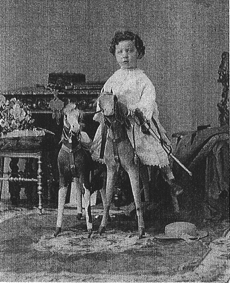
He sat on a horse before he could walk
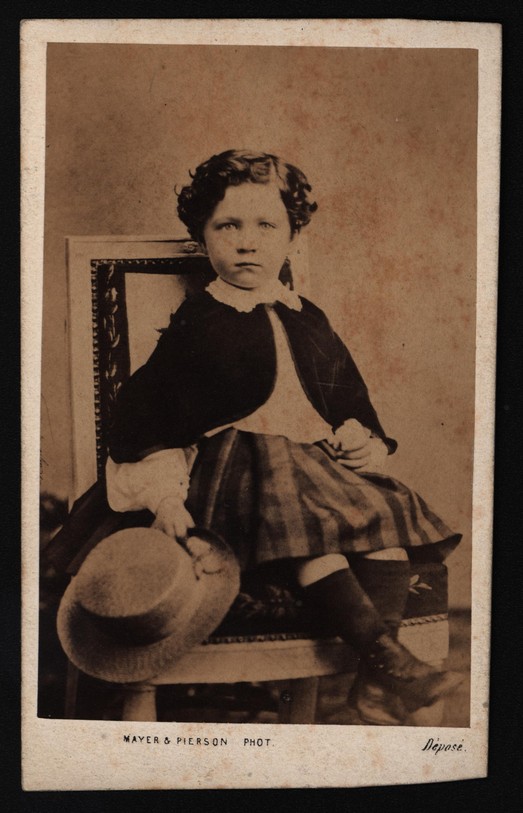
A nod to his Scottish connections
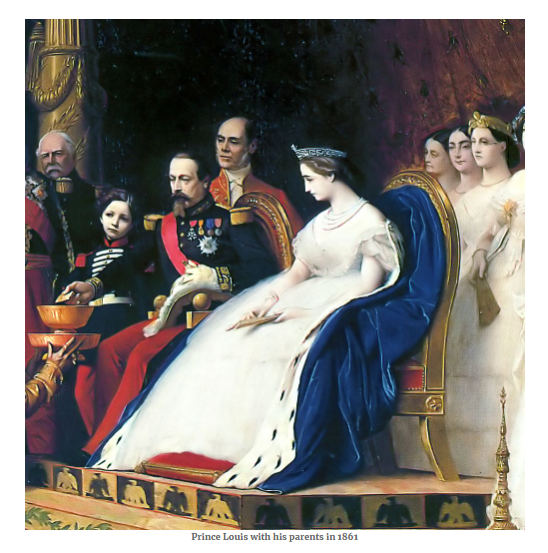
Napoleon laid the foundations for a modern France. Famines were ended, an infrastructure of railways, canals and a banking system enabled economic growth. Great exhibitions showcased the best of French industry and technology. Social reforms included secularising education, letting women get an education, allowing trade unions and introducing a welfare safety net.
Whilst Eugénie was establishing France as the leader of culture and fashion, he was working with Baron Haussmann to redevelop Paris. Eugénie was Regent during Napoleon’s abscences and represented him at the opening of the Suez Canal.
Sadly, in France the contributions they made during the Second Empire have been largely forgotten. He was written out of history by the Republican Government that took over after defeat in the Franco Prussian War and the peoples’ dismay at his surrender. Today that situation is changing in France and there is a much greater awareness of the Second Empire and the significance of the last Emperor of the French.
Given by historian Frances Foster, her research focuses on the friendship between two young Queens and very powerful women who first met in 1855. Their relationship started slowly but deepened over the years and lasted until Victoria’s death. These insights are more personal and provide a sense of the Empress as an individual.
One of three presentations given at Camden Place, Chislehurst on 5th May 2026, as part of our celebration of the Empress Eugénie’s bicentenary.
Discover Camden Place’s unique history through the people and events that shaped its story that spans more than 400 years.
