The Architecture of Camden Place
Hidden in plain sight, learn more about the architectural secrets of this unique historic house.
In the early 1600s life in London was unpleasant and fear of plagues and the poor air quality was driving the well-off to look for homes in healthier locations. Chislehurst was an ideal choice, just 12 miles from the City and even closer to the Royal Court at Greenwich.
One such person was William Camden who set up home on 2 acres of the current site of Camden Place in 1609.
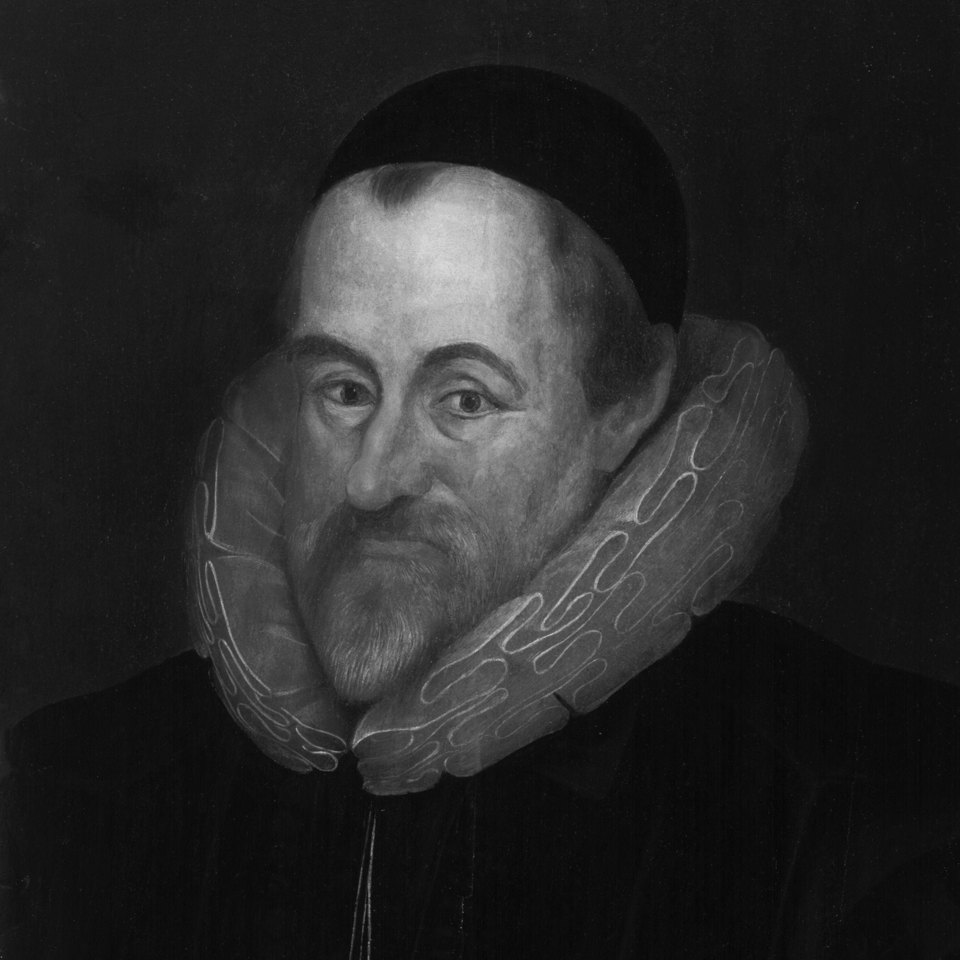
William Camden was a self- made man at a time when power was usually a matter of birthright and patronage. Born to a poor family in the Old Bailey area of London, he was educated through charity at the recently opened Blue Coat School and went on to hold one of the most powerful positions in the country as a senior herald – The Clarenceux King of Arms. On that upward career path he was a teacher, the Headmaster of Westminster School and the Librarian at Westminster Abbey. He was a pious man who never married or had children.
He must have worked hard to attain this position. It seems he was pragmatic and politically astute, a diplomat who resolved problems, could influence others and ‘kept his head.’ He earned the respect of both his Queen and then King James l.
He was described by his contemporaries as the leading academic of his day – quite an acolade when Shakespeare was also on the scene. He can reasonably be called the ‘grandfather’ of modern history– his influence showed people how history should be recorded, through artefacts, diaries and contemporary records. In doing this he removed the recording and study of history from the hands of the church and encouraged a more evidence based, objective and secular approach.
Camden was diligent – to understand Roman history of Britain he went to Italy and learned Italian and similarly he studied Welsh so he could reference original sources.
His major work, Britannia, written in Latin, was the first topographical study of the country since the Doomsday Book. In his work he was seen as objective and balanced – a reporter rather than an analyst and he was humble- he never sought titles or accolades. The King of Arms position was the only one he accepted,
Though he didn’t die a particularly wealthy man he was comfortably off – with enough money from his land at Bexley to endow the first and today, the oldest, (Camden) Chair of History at Oxford.
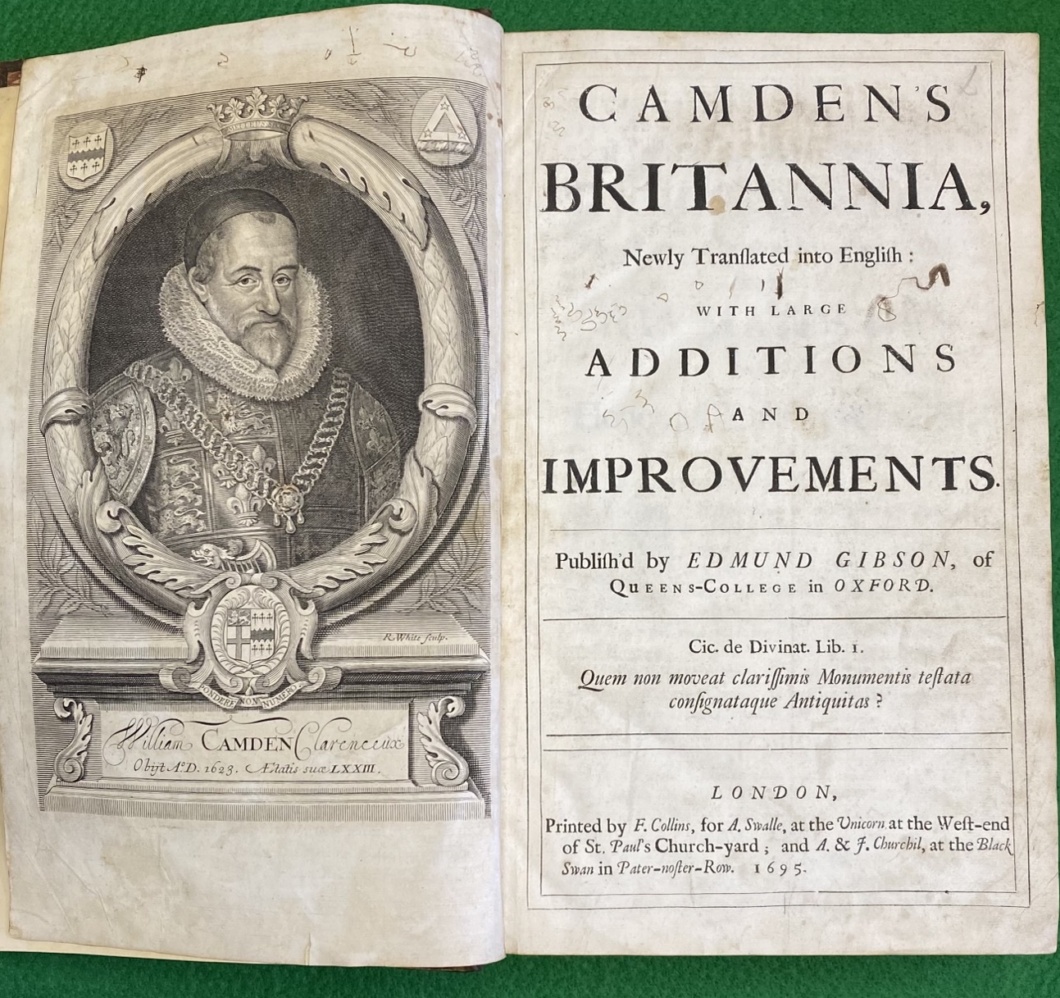

Camden came to Chislehurst to be nursed back to health after a severe illness, by his friend William Heather and his wife. He almost certainly knew other local notables including the Walsinghams.
Chislehurst seems to have suited him and in 1609 he set up home on two acres of land, surrounded on 3 sides by the common. We have no images of the house but it was probably a modest country property, in keeping with his own lack of flamboyance.
By this time he was something of a celebrity, a well known historian, antiquarian and author. He had published a number of works, including Brittannia but also The Annals of Queen Elizabeth, documenting her reign. He completed this work, at the request of King James, whilst living in Chislehurst.
Queen Elizabeth asked him to sort out the College of Heralds, at the time rife with corruption. He was catapulted into one of the most senior roles, the Clarenceaux King of Arms. As he result he presided over the funeral of Queen Elizabeth and the proclamation of King James.
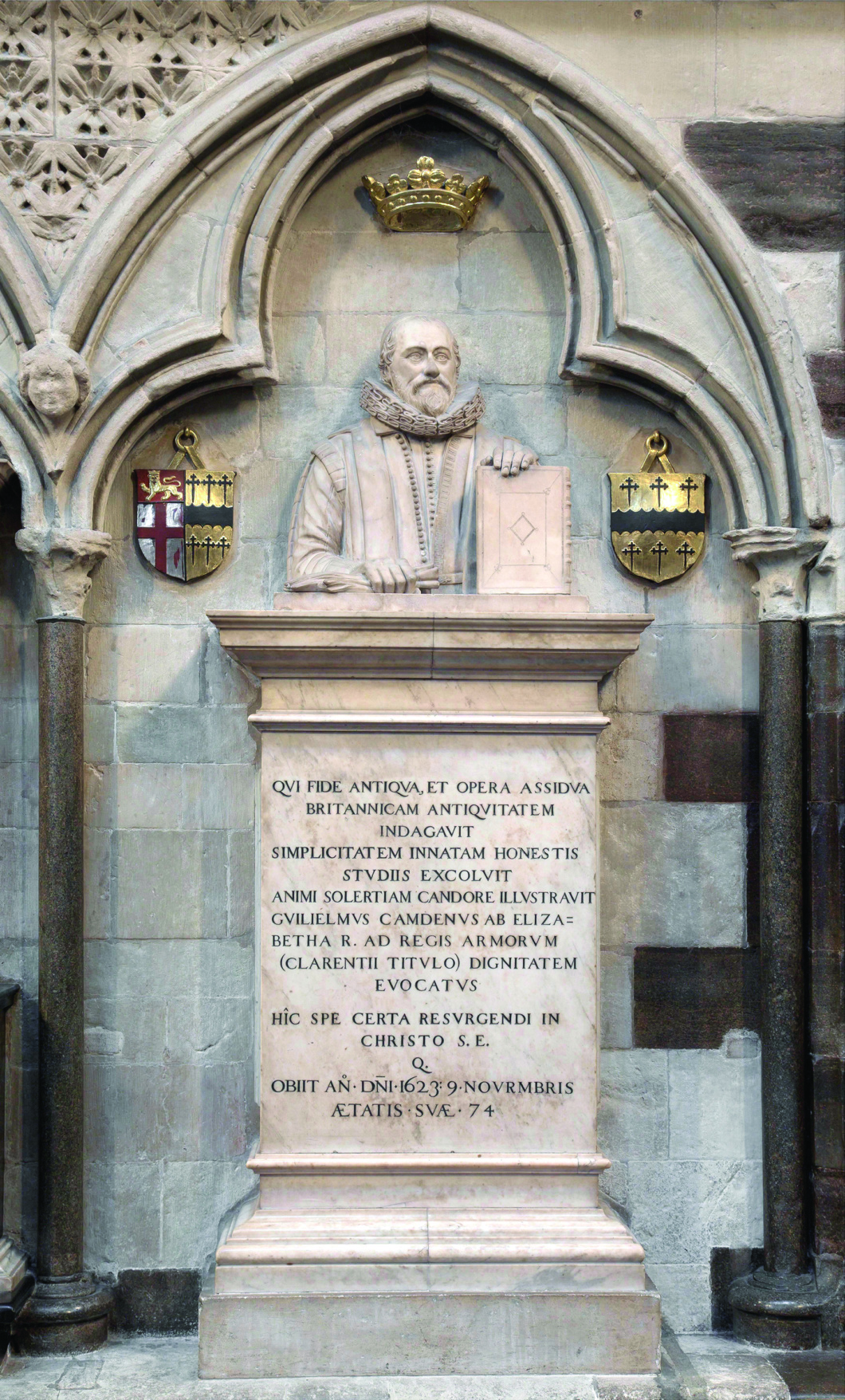
Camden's tomb at Westminster Abbey
Camden should be buried in Chislehurst
By rights William Camden should have a grave in Chislehurst. He died at his Chislehurst home on 9th November 1623 after deteriorating health left him paralysed.
Pragmatically he prepared for his own death and made his wishes clear – that he wanted
‘ to be buried in that place where it should please god to call me to his mercye.’
His friends thought he deserved something much more and a very grand ceremony, almost Royal in its scale and attendance was organised for Westminster Abbey.
The mourners were his friends and colleagues from across all areas of his interests. with his escort to the Abbey reflecting the social class system from 26 poor men in gowns to knights.
He was buried in the South transept of the Abbey which later became Poet’s Corner. His tomb is magnificent, a bust of the man holding Britannia with his coat of arms, the coat of arms and crown of the Clarenceux King of Arms and these words:
William Camden, Clarenceux King of Arms, who illustrated the British Antiquities, by ancient truth and indefatigable industry, and adorned his innate simplicity with useful literature, and illustrated his pleasantness of humour with candour and sincerity, lies here quietly, in hopes of a certain resurrection in Christ.
Discover Camden Place’s unique history through the people and events that shaped its story that spans more than 400 years.
