The Architecture of Camden Place
Hidden in plain sight, learn more about the architectural secrets of this unique historic house.
Following the death of Nathanial Strode, Camden Place was sold at auction. In just a few short years it became a golf club.
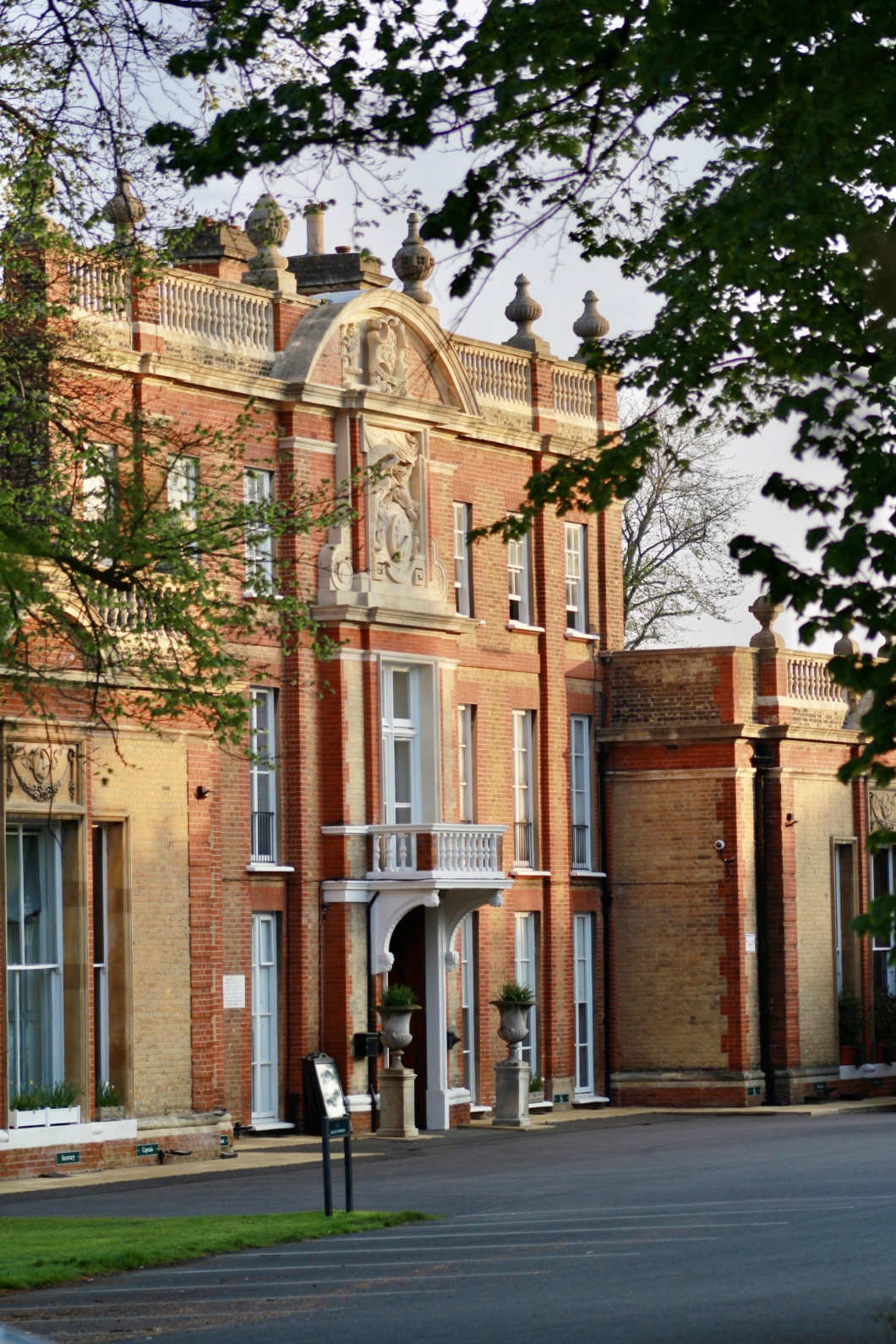
This was a perfect opportunity for builders
Following the death of Nathaniel Strode, over three days in 1894 Christies sold the art, furnishings and fixtures from the house, including 101 lots of art and tapestries and two rolls of linoleum from the kitchen.
The 127 acre estate, including the house, was sold separately, advertised as an ideal property for building up to 500 houses.
There can be little doubt that this magnificent and architecturally important house would have been lost in any large building scheme.
The site was already reduced from when Strode purchased it in the early 1860’s. Before the Imperial family arrived, he sold plots for property development, creating what is now Yester Road. The incomes from this presumably going towards the changes underway at Camden Place. There were strict rules about the height new properties could be. Architect Henry Clutton, who was working on the changes at Camden Place bought one plot but ignored the restrictions and ended up in a court case with Strode.
We also know that acclaimed minaturist Eduard Moira bought a plot from Strode in 1873, just after Napoleon’s death. The house he built became the first house, Eldridge, built in Southill Road. Moira pained murals of Camden Place, Candy House and one other of Strode’s properties in the over door boiseries in the Camden Place drawing room.
Note on the map produced for the sale of Camden Place, after Strode’s death, that the entrance to the estate is on Bromley Hill – before the later development of houses on Camden Park Road.
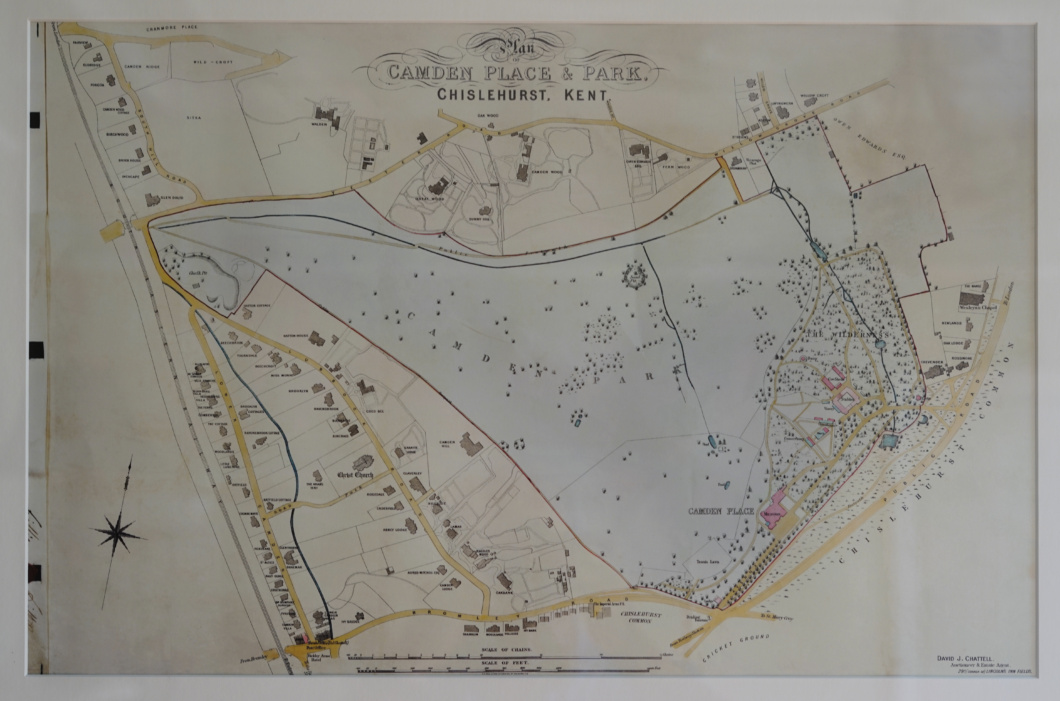
Map of the Camden Place Estate as sold after the death of Nathaniel Strode
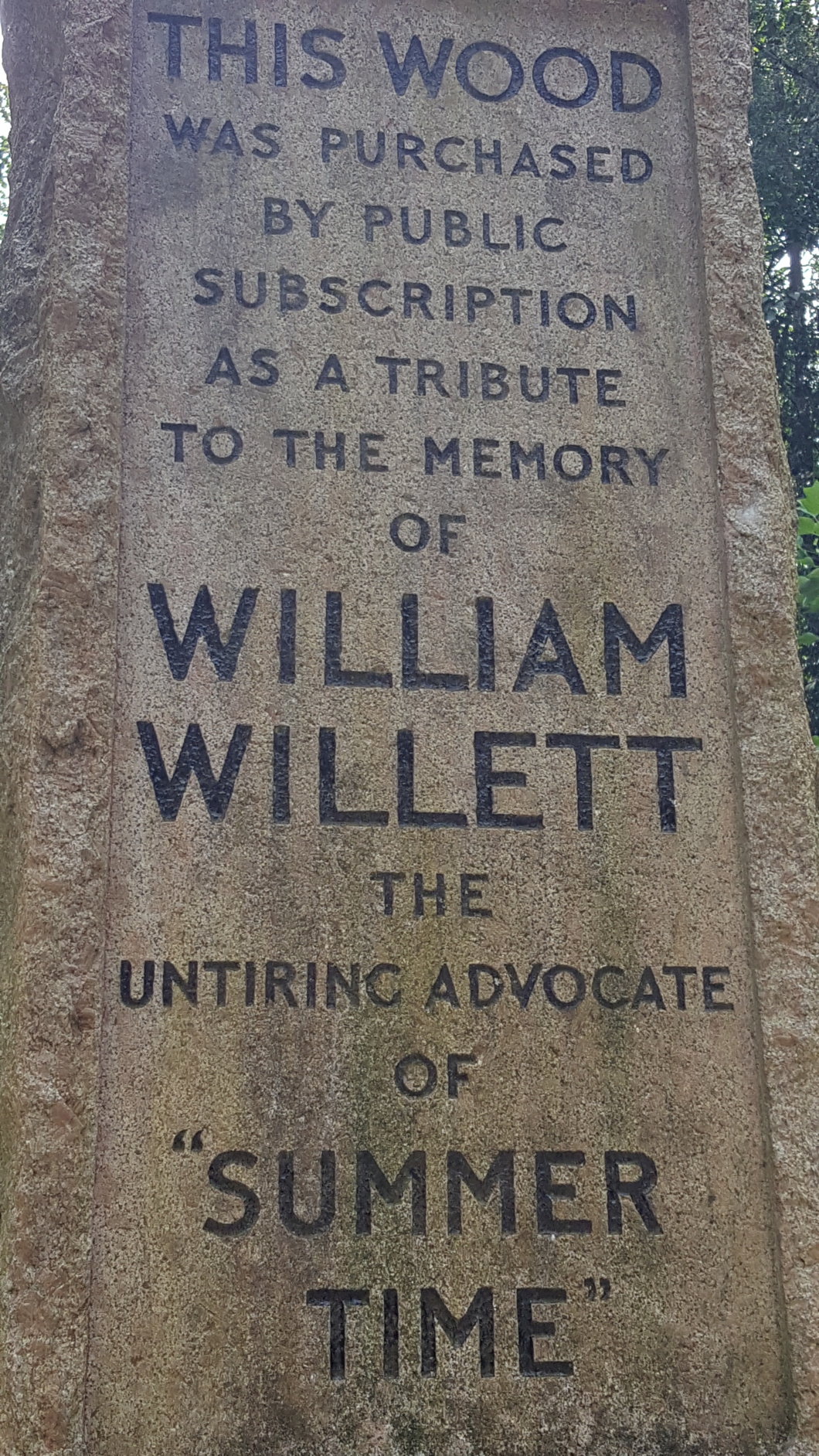
Local building firm the Willetts purchased the Camden Place property and estate and work began on the site. However, in the background was Alexander Travers Hawes. He was Chair of the Commons Conservators and was dedicated to keeping Chislehurst green.
He stopped the Willetts in their tracks by calling on the lease, signed in 1717 to give Robert Weston 500 years use of the land he needed to create his magnificent driveway. Whether by accident or design the Vestry had retained a ‘ransom’ strip, across the property. Travers Hawes used this to prevent the builders bringing building materials onto the site. Work stopped.
After some negotiations a compromise was reached. The Willetts were allowed to build on half the land as long as half was retained for recreational benefit for the local community. And so, as a consequence, the solution of a golf club was arrived at.
William Willett the Younger (famous for his proposed Daylight Saving idea) seemed to have taken control of this project. He built himself a house, The Cedars, opposite the current gates. Large properties were to be built on either side of the estate, creating Camden Park Road and The Wilderness. The centre of the estate, some 62 acres would become a golf course, owned and operated by the proprietor, William Willett.

Course designer Tom Dunn
A family club from the outset
Chislehurst Golf Club was established with a 9 hole course for men and a small 9 hole ladies course.
The course designer was Tom Dun.
In the Illustrated Sporting and Dramatic News 28 July 1894 the following comments were made ‘…Tom Dunn has had enormous practice in this particular kind of work and is certain to make the most of any ground entrusted to his care. At Chislehurst it seems to me he has been surprisingly successful and whilst every available hazard has been utilised to the full, the course is free from that great bane of 9-hole courses, crossing’.
But it was a six days a week course. No play was allowed on Sundays.
According to an article in the Dundee Evening Telegraph of 22 October 1895, it seems that Chislehurst was unusual in its approach to Sunday golf. In most other private clubs, golf on Sunday was as common as golf on Saturday. Proprietor William Willett would not allow Sunday golf, even though it probably cost him potential revenue.
Despite the prohibition of Sunday golf, CGC quickly became a hub of social life. A squash court and tennis courts, dancing lessons and the Victorian glass house for afternoon tea attracted many members.
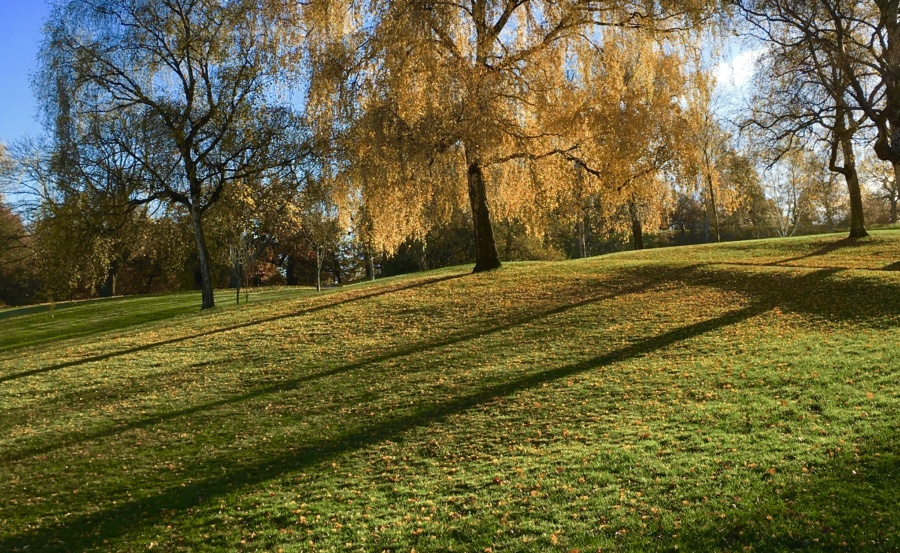
On Saturday 26 May 1894 Chislehurst Golf Club was formally inaugurated. At that first meeting of members a provisional committee was established consisting of the President, Lord Walter Gordon Lennox, a Vice President, Sir Pattison Nickalls JP and the Hon. Secretary Mr Ernest Satow-Allen.
The first Captain was John Dun and other members of the committee included the architects of the Club, Mr Travers Hawes and owner William Willett Jnr.
The Club appointed Mr Dan Bryson as Professional.
For the formal opening Camden Place was redecorated and the two courses were ready for play by the members from about mid-June but the formal opening of the club took place on 21 July 1894. The opening ceremony was performed by the Right Hon. A.J. Balfour MP who was at the time Captain of the Royal and Ancient Golf Club and Conservative Leaderin the House of Commons. (In 1902 he was to become Prime Minister and later Earl Balfour).
Balfour was much in demand for opening of golf clubs and he had a particular connection to Chislehurst because his golf teacher was the course designer Tom Dunn. Mr Balfour and his brother Mr G. W. Balfour MP travelled from London to Chislehurst for the opening in a special train, placed at his disposal by the South Eastern Railway Company. They were met at the station by Mr. Travers Hawes.
The formal proceedings began with a luncheon for 120, served in the impressive wood panelled dining room. There were a number of distinguished guests present. According to the Bromley Chronicle ‘the luncheon was of the most recherché character, having been ably prepared by Mr and Mrs Pilcher, the steward and stewardess of the club’.
In his speech Arthur Balfour described golf as, ‘The most difficult game perhaps that exists’ and had a warning for novices to the game ‘It is very easy in the early period of golfing education to acquire tricks and faults which will forever prevent that player reaching the higher excellences of the game’.
Balfour would later become Club President, a role he kept until his death.

John Dun
John Dun had been Captain of Royal Liverpool at Hoylake in 1873 and 1874. Dun insisted that he wear his Hoylake captain’s red coat with the dark green collar at Chislehurst. It is thought that Hoylake’s close connection with the Liverpool Hunt Club influenced their choice of jacket. So the Hoylake tradition was shared and took root at CGC. A replica of Dun’s coat has been worn by all subsequent Chislehurst Club Captains. Thus, since the 1970s the new captain has received his red jacket during the Annual Men’s Dinner.
This portrait of Jon Dun was presented to the Club by Mr Leonard R Powell at the Annual Dinner in 1895. The portrait was painted by Rudolf Blind (1846-1889) and must therefore have been painted during Dun’s days at Hoylake.
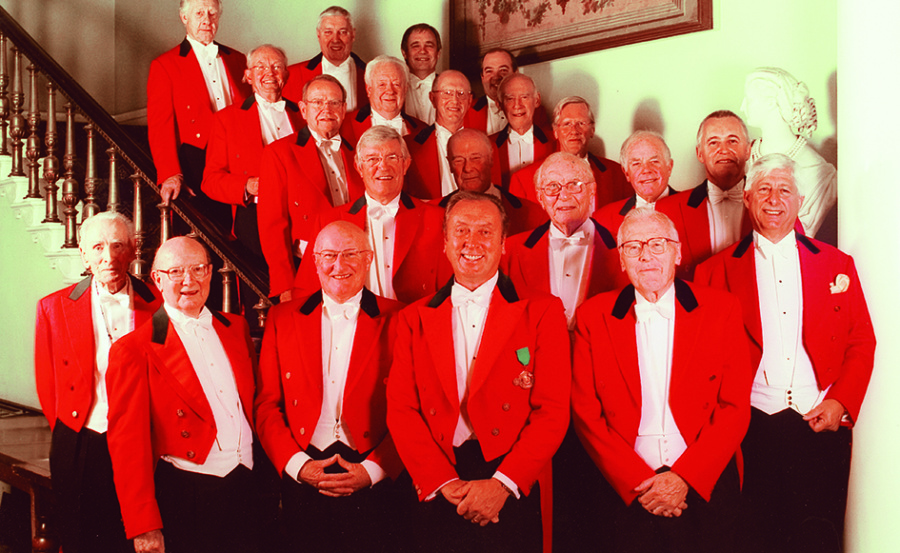
The Past Captains wear their red jackets just 4 times a year.
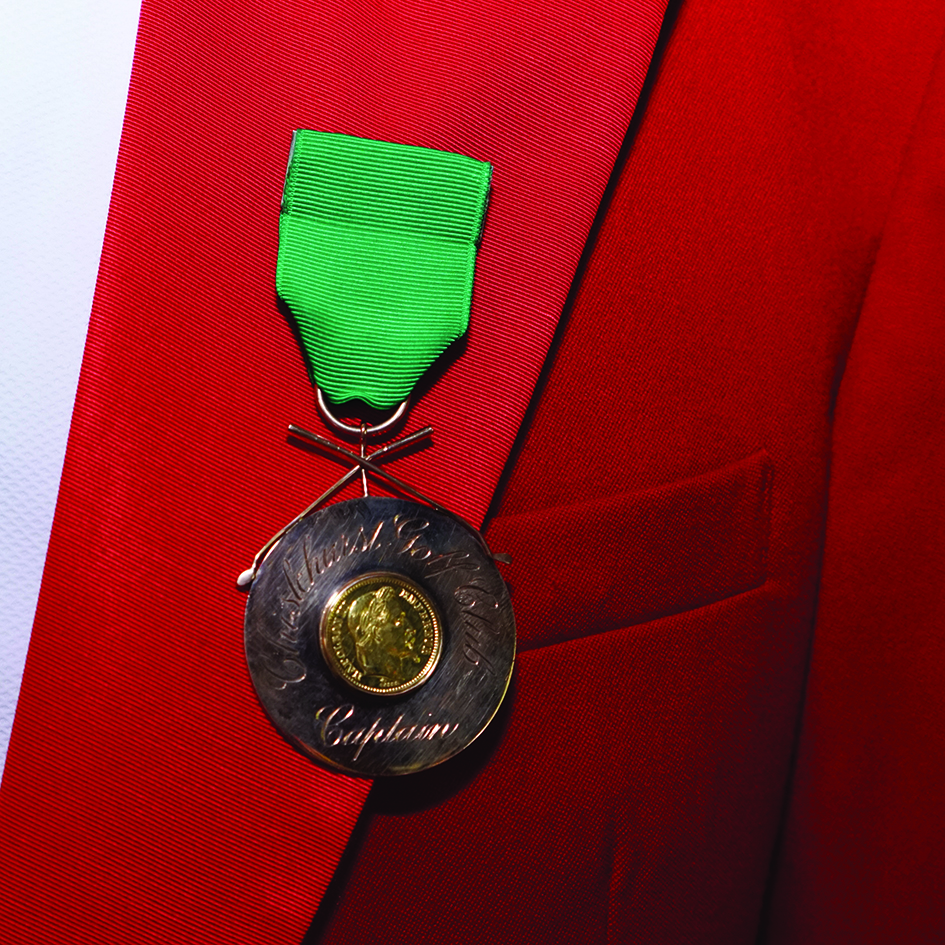
The captain's medal
In 1899, Chislehurst Golf Club became a Members Club

The Willetts agreed to the sale in principle for a price of £36,000 but they wanted it to be subject to certain conditions. These included changes to the restrictions relating to their access across the Common. The negotiations for the sale would therefore involve not just the Club but also the Commons Conservators where Mr. Travers Hawes was Chairman. Although happy to sell Camden Place and the golf course, the Willetts planned to retain the part of the estate called the Wilderness (now Wilderness Road) for building purposes. They wanted to ensure that there were two main means of access for this development from the public road because, if Camden Place were sold, there would be no access to the Wilderness through the southern entrance gates. This would leave only the original eastern entrance to the estate as a means of access to the Wilderness.
Mr. Willett Snr. stipulated that the sale of Camden Place should be conditional upon the Commons Conservators granting him the right to construct another access road from Prince Imperial Road, across the Common to the Wilderness. He also wanted certain other modifications to the agreement made between himself and the Conservators on the 18 April 1893. It is not hard to imagine that the Willetts’ requests caused the Conservators some deliberation and presumably at times it was slightly awkward for Mr Travers Hawes who was wearing his two different hats, Chairman of the Conservators and champion of the embryonic Camden Place Ltd. It seems the Conservators were persuaded by the fact that the proposals put forward were, to all intents and purposes, supported by the large number of club members and residents who were about to lend a substantial sum of money to the Golf Club project. The fact that this scheme also prevented any further building on a large part of the Camden Park estate must have been an important consideration.
Eventually an arrangement was arrived at and embodied in a new agreement between Mr Willett and the Conservators dated the 21 February 1899. Camden Place Ltd is incorporated. At the same time as these negotiations were taking place, Mr Travers Hawes set about forming a company and borrowing the necessary £36,000.
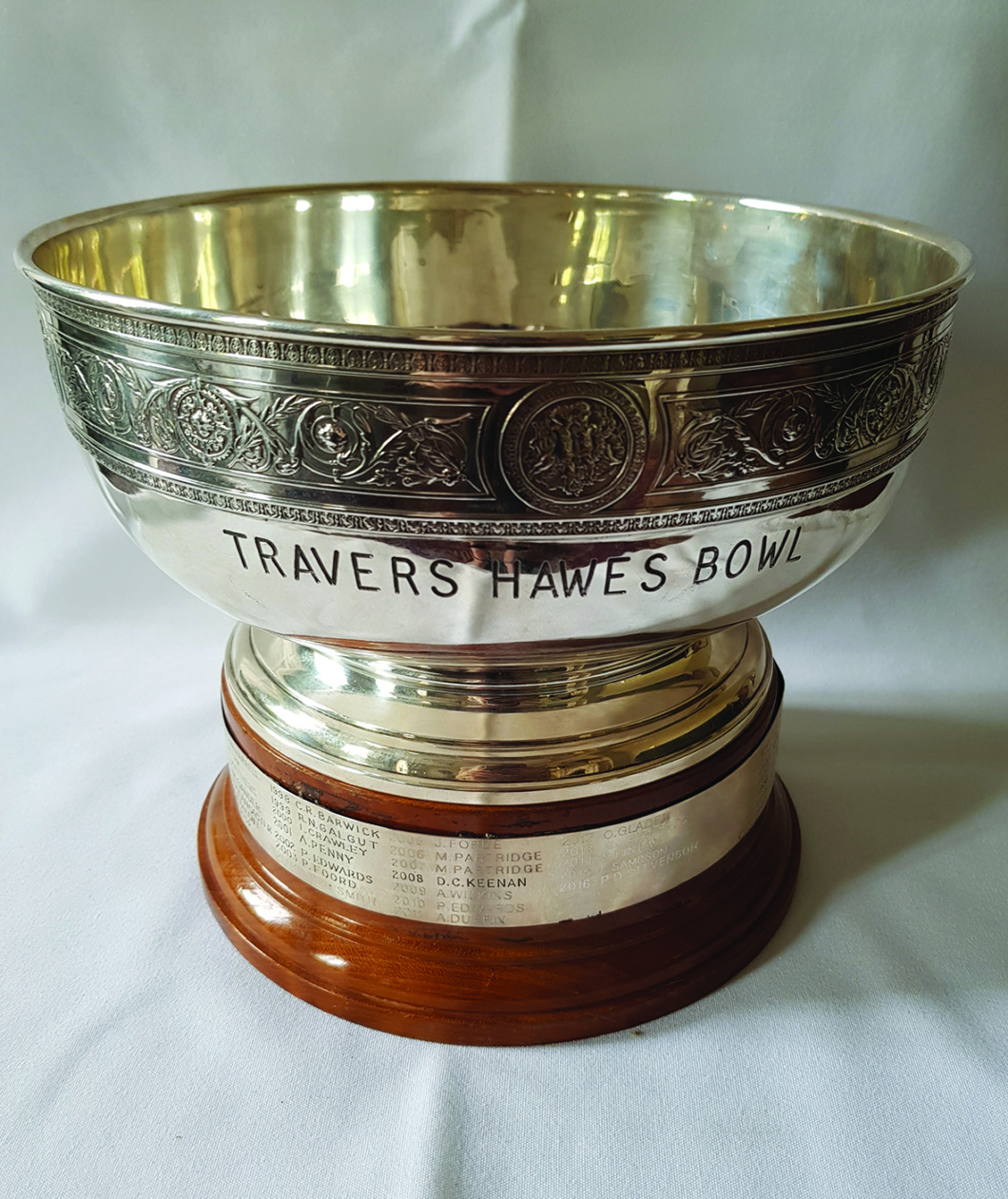
The Travers Hawes Bowl was given to the club after Travers Hawe's death
The company was named Camden Place Limited and it was incorporated on the 5 August 1898 with a nominal capital of £78, divided into 1560 shares of one shilling each. The main purpose of the company was to acquire Camden Place and the associated land and to promote and run a golf club. There was a power to issue debentures, charged against the company’s property. In 1898 £36,000 was a very large sum of money (equivalent to about £4.5 million in 2018) but the persuasive Mr Travers Hawes personally solicited contributions from the members of the Golf Club, their friends and neighbours and the local residents. There were many who, like him, were anxious that Camden Park should remain an open space. There were contributions from £50 to £2,000. The contributors were to receive debentures issued by the Company. There was a slight hiccup when the target had nearly been reached and one or two people withdrew. William Willett Jnr., who had already contributed £3,000, saved the day by coming forward with another £2,000
The sale and purchase of Camden Place and the golf course was agreed on the 27 February 1899. The Company took on the proprietary interests of Mr. Willett Jnr. in the running of the Golf Club. The conveyance of the property was dated the 8 May 1899.
The last step in the Travers Hawes scheme was the issuing of debentures to those who had contributed to raising the purchase price. The Company’s Articles of Association only allowed the directors to raise up to £39,000 by the issue of debentures:
All the debentures were secured by means of a trust deed, dated the 17 July 1899, on the freehold of Camden Place and the golf course land. The debentures carried interest at the rate of 2½% per annum. The principal of the sums of money secured was to be repaid on the 1 July 1911. Under this trust deed the debentures did not become repayable before 1911, even if the Company defaulted in the payment of interest.
The Travers Hawes’ solution meant that the directors of the Company were obliged to conduct its business in the interest of the debenture holders. The Articles of Association provided that each share carried one vote at a general meeting but only if the shareholder also held £25 of debentures against that share. There was therefore no conflict of interest because the shareholders and the debenture holders were the same individuals, each holding shares in proportion to debentures, namely one shilling share for each £25 of debenture.
Alexander Travers Hawes’ efforts meant that the existence of the Golf Club was safeguarded, at least until 1911. But it was appreciated, even at this early stage, that if the Club was to survive after that date some further financial arrangements would be needed.
Post purchase celebrations
On Saturday, 24 June 1899 another luncheon for 120 was held at Camden Place, this time to celebrate the purchase of the club. The first captain John Dun was now Chairman of Camden Place Ltd. In his speech he paid tribute to the great exertions of Mr Travers Hawes in bringing the purchase scheme to fruition. Praising Mr Travers Hawes’ energy, perseverance and tact in overcoming the many obstacles involved, he presented him with a handsome silver bowl as a testimony to the esteem and thanks of members and friends.
Travers Hawes Bowl
In 1934 the bowl was brought back and presented to the golf club by Travers Hawes’ widow. Known as the Travers Hawes Bowl it was one of the Club’s most treasured trophies, played for annually. Unfortunately, it was stolen in 1983.
After the lunch, two foursomes were played. The scene was described in Golf Illustrated in the following words:
‘The lovely park, with its gracefully undulating scenery, was looking at its best, and the presence of a large number of fair women in brave attire and bronzed golfers in scarlet coats, added a charm which the imagination can faintly picture.’
In the first match Mr Gerald Balfour and Mr John Penn beat Mr A.J. Balfour and Mr D. Blyth by 8 and 6 and in the second W.C. Gully (Speaker of the House of Commons) and A. Graham Murray (Lord Advocate) halved with Sir John Lubbock and Sir Samuel Hoare.

From the earliest days it had been the ambition of the members to expand the course to 18 holes. Once Camden Place Ltd. had taken ownership the members’ vision was quickly to become a reality.
Only 63 ½ acres had been sold to the Company and that included the footprint of Camden Place itself. This was inadequate for 18 holes, and it was therefore necessary to acquire more land. Fortunately, the Club was able to obtain leases for another four acres. This included the 1¼ acre site which would be given over to allotments during WWI and sub-let to Chislehurst and Sidcup Urban District Council in October 1920. Although subsequently sold it is still allotments today.
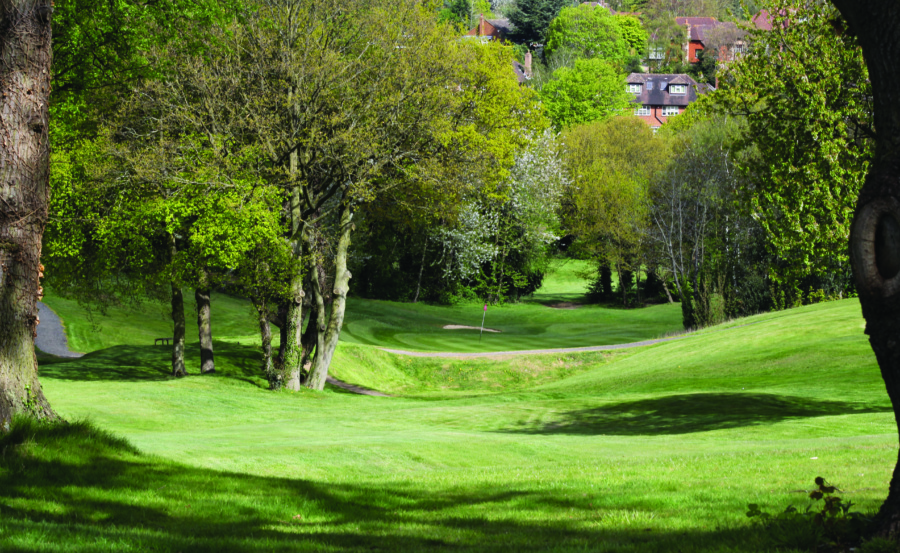
Designing the new course was undertaken by a club member, Mr Easton Devonshire. It does not seem he had any previous experience in designing golf courses but he was one of the most ardent advocates for the course extension and he tackled the task with enthusiasm. The legendary course designer Harry S. Colt added his signature to Devonshire’s design and Chislehurst is attributed to him by the Colt Association, but the extent of his influence is unknown.
The practical work of extending the course was supervised by Robert Munro, the Club Professional. With just over 60 acres to play with, the problem was how best to cram a quart into a pint pot. Part of the solution was ‘crossover’ holes; the 8th crossing the 14th and the 11th; and the 16th crossing the 1st. It was also necessary to incorporate the ladies’ course into the 18 holes. Mr. Devonshire’s design shaped the fundamentals of today’s layout. In future years some holes would be lengthened and more bunkers would be added but Mr Devonshire would still recognise the course.

The new 18-hole course was opened for play in June 1900. The lady members of the Club were given the right to play over the new course with forward tees, under certain restrictions as to their hours of play. The prohibition on Sunday golf, instigated by William Willett continued.
The membership had grown to 117 men and 60 ladies. Subscriptions were still six guineas for men and three guineas for ladies, with entrance fees of five guineas and three guineas respectively. At the Annual Dinner of June 1900 Mr Devonshire was installed as Captain for the coming year.
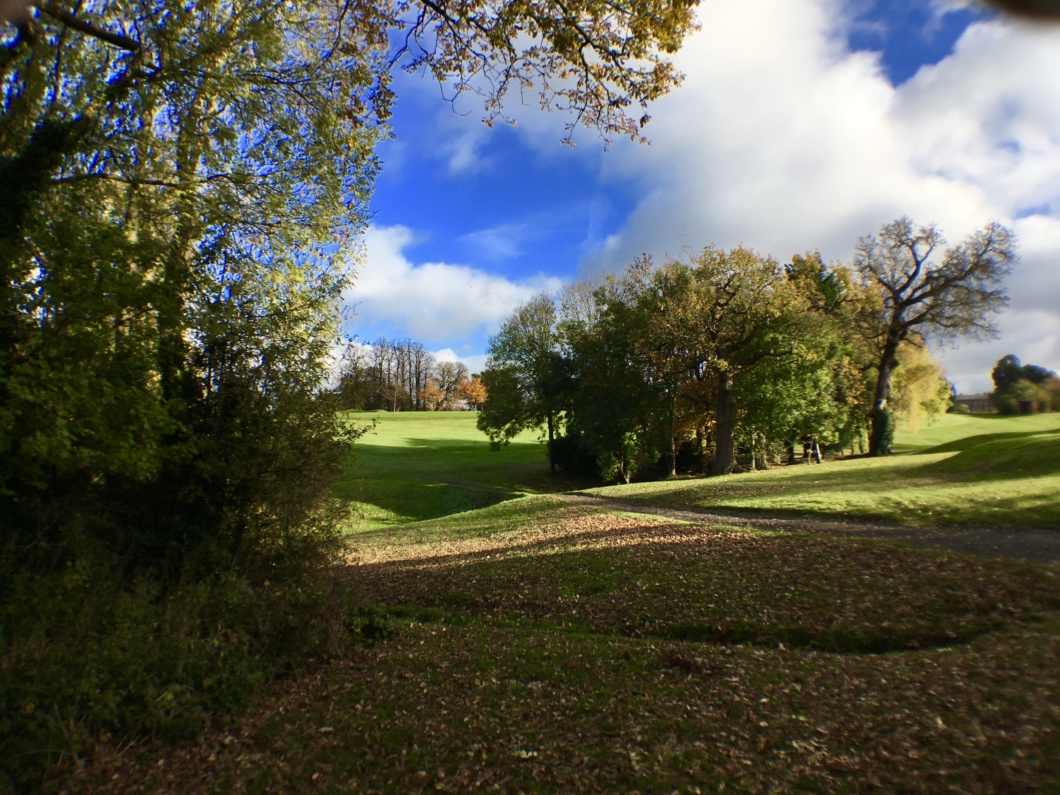
In June 1914 very substantial alterations were completed, lengthening the 1st, 2nd, 11th, 12th, and 18th holes and adding some 50 new bunkers. Designed by the legendary James Braid, the work was supervised by F. G. Hawtree, who was at that time greenkeeper at Sundridge Park Golf Club but would later become famous as a golf course architect, working with A. J. Taylor.
The company Hawtree founded in 1912 came back to work on the course in 2000. As the new bunkers arrived the resident flock of 150 sheep left. The committee felt that the presence of sheep would ‘not be conducive to good bunker management.’
To commemorate the alterations an exhibition match took place on the 23 June 1914 between James Braid, Ernest Jones (the Chislehurst Professional), Tom Ball (Raynes Park) and Jacob Ross (Park Langley). They played a medal round in the morning and foursomes in the afternoon. In the medal round, Braid took 73 against 68 by Jones, 65 by Ball and 66 by Ross. In mitigation of Braid’s poor score it was ungenerously suggested that he wanted spectators to ‘appreciate’ the effectiveness of his positioning of the new bunkers
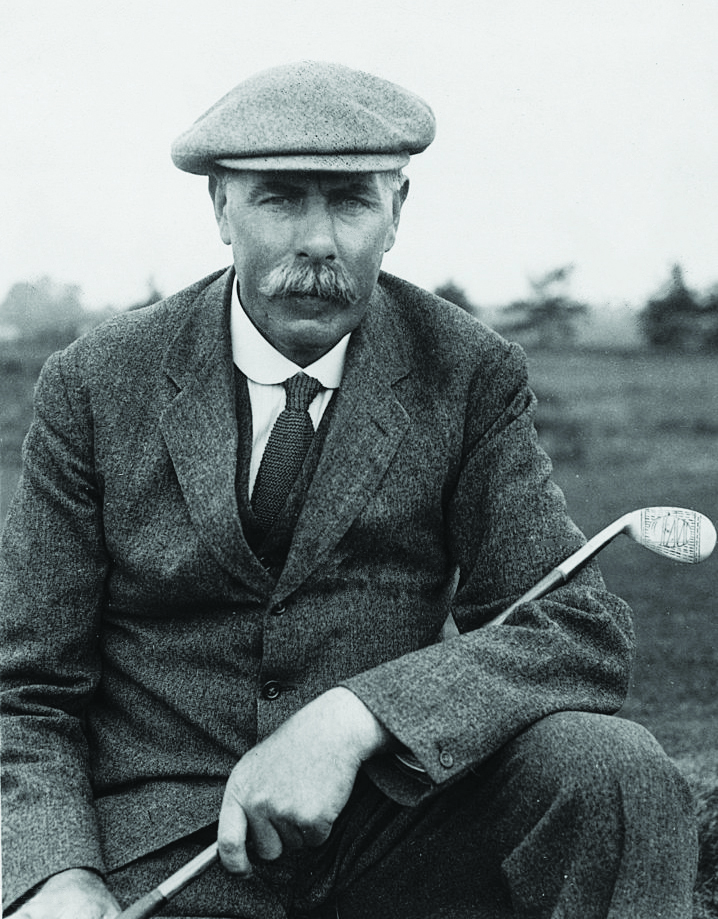
James Braid was one of ‘The Great Triumvirate’ of Braid, Harry Vardon and J. H. Taylor. He was British Open Champion in 1901, 1905, 1906, 1908, and 1910 and pioneered the explosion shot from sandy bunkers. In 1912 he scaled back his tournament golf, became the Professional at Walton Heath Golf Club and built his reputation as a golf course architect, designing over 200 courses.
Discover Camden Place’s unique history through the people and events that shaped its story that spans more than 400 years.
