The Architecture of Camden Place
Hidden in plain sight, learn more about the architectural secrets of this unique historic house.
The Trophy Hall only got its lantern roof during Strode’s ‘frenchification’ of the house in the 1860’s. Until then it was an open courtyard. Today it is decorated with the golf club honour boards charting 130 + years of golf history. During the 1870’s it was a picture gallery.
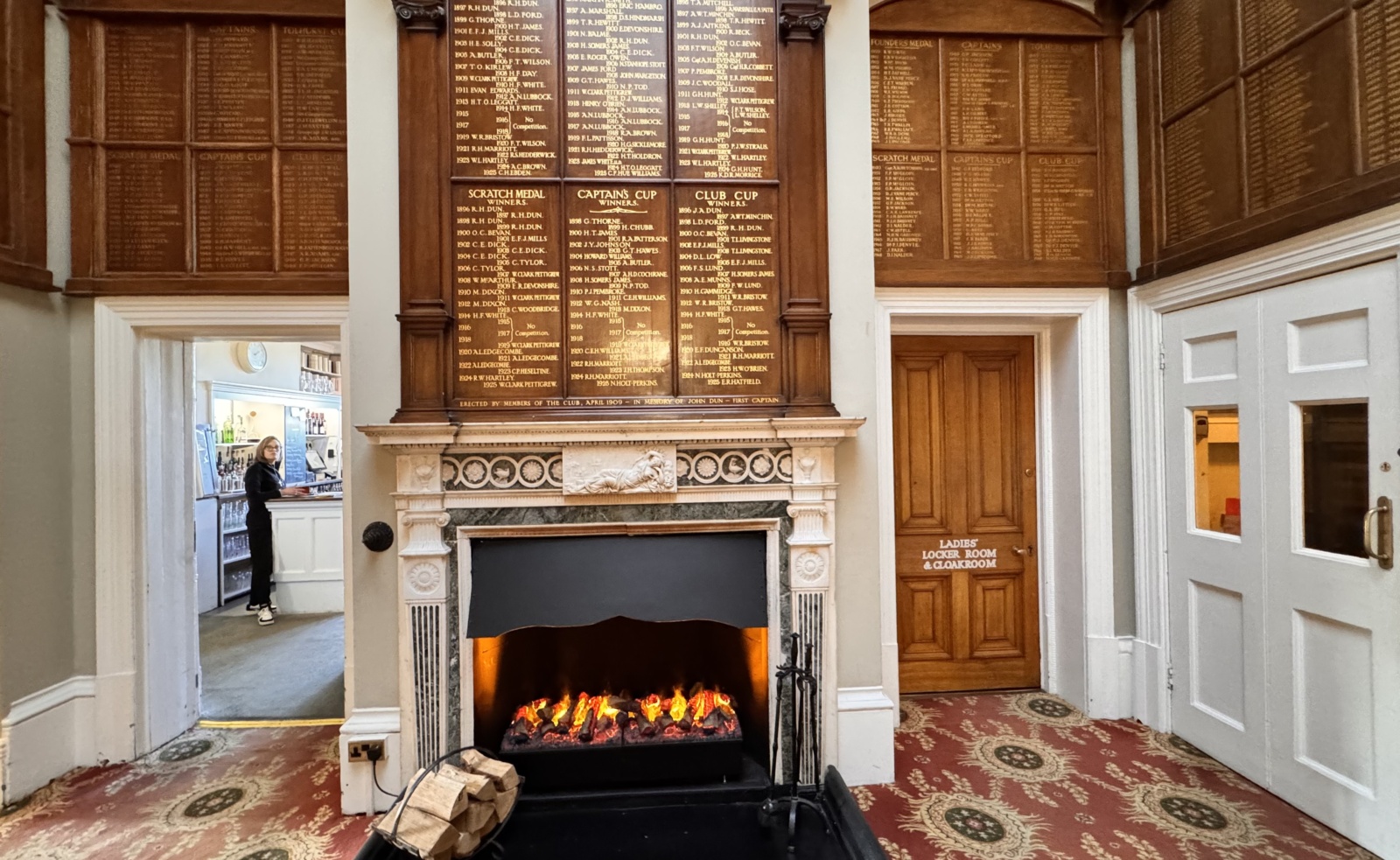
A short video by Mikael Hasler-Fry
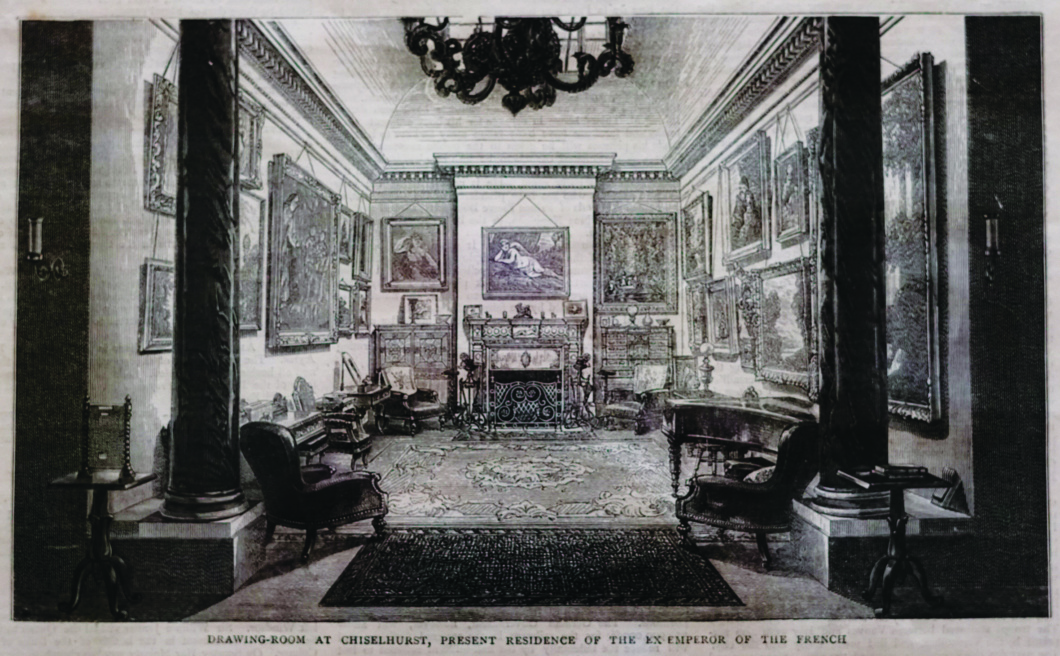
The Picture Gallery as used by the Imperial Family
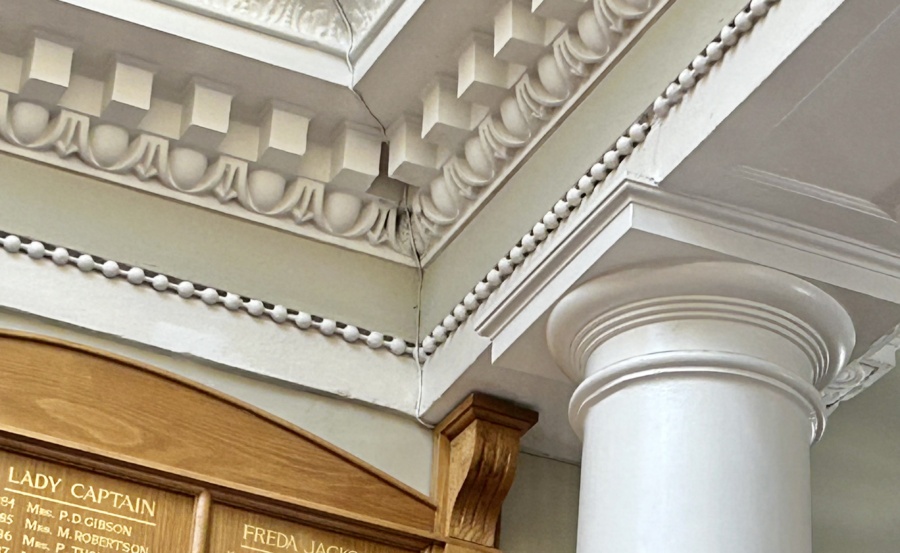
Detailed plasterwork throughout the hall and gallery
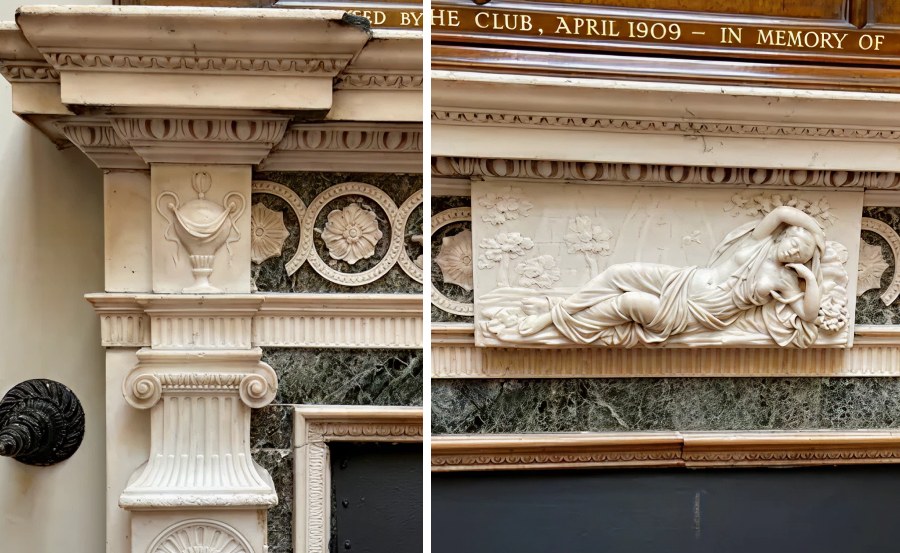
The Adam's style fireplace features Cleopatra and the asp
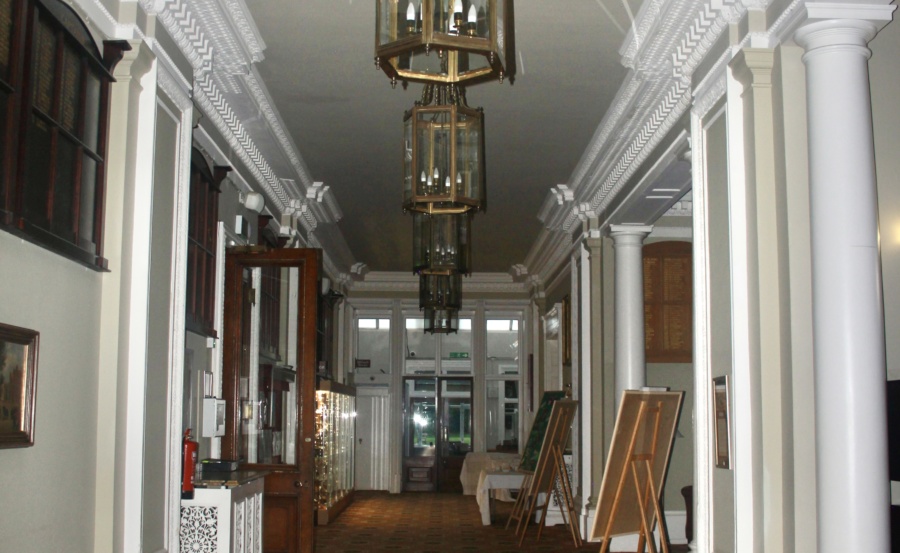
The long gallery runs across the front of the picture gallery
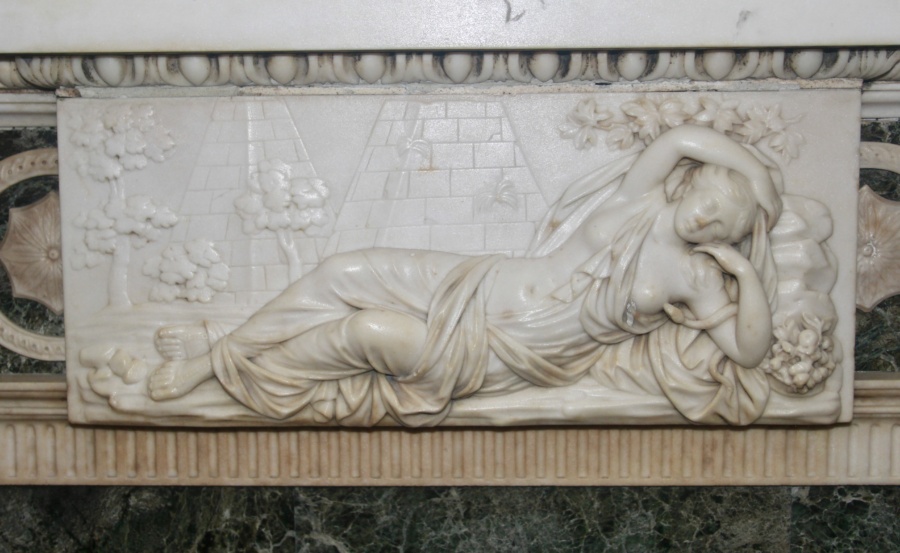
Cleopatra and the asp
The Prince Imperial's tutor, Augustin Filon and Queen Victoria noted their first impressions when arriving at Camden Place.
The tutor’s impression
‘On entering the house I found myself in a large corridor facing a big hall where the light falls through a skylight. On the walls of the hall and along those of the corridor were pictures, busts and cabinets of ebony or tortoiseshell inlaid with mother-of-pearl, brass and copper; behind the glass doors of these cabinets was arranged a vast and heterogeneous collection of objects of very unequal value. At the end of the hall was a huge bevelled mirror with a carved and pierced frame. To the right a big gilded timepiece that ticked out the seconds.’
Queen Victoria’s observations
Queen Victoria made an early visit to Eugénie on the 30 November 1870 and Victoria wrote in her diary:
It was a dull, raw, winter’s day. At the door stood the poor Empress in black, the Prince Imperial and, a little behind, the ladies and gentlemen. Everything was like a French house and there were many pretty things about. She looks thin and pale but still very handsome. The Prince Imperial is a nice boy but rather short and stumpy. We stayed about half an hour. It was a sad visit and seemed like a strange dream.
Today the hall showcases over 130 years of achievements by the golfers of Chislehurst Golf Club.
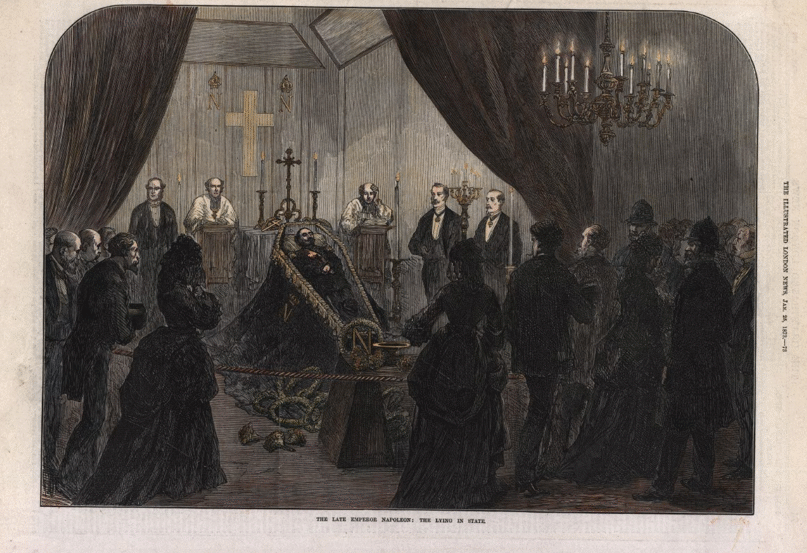
The picture gallery was transformed
When Napoleon lll died at Camden Place in January 1873, the picture gallery was transformed into a Chapelle Ardente – a place for a sovereign to lay in state pending their burial. Black drapes and French flags provided the backdrop for thousands of mourners from France and England to pay their respects.
Discover Camden Place’s unique history through the people and events that shaped its story that spans more than 400 years.
