The Architecture of Camden Place
Hidden in plain sight, learn more about the architectural secrets of this unique historic house.
There were Imperial residents at Camden Place from late 1870 until 1881. The Empress and Prince Imperial took up residence at Chislehurst in 1870 and Napoleon joined them in March 1871.

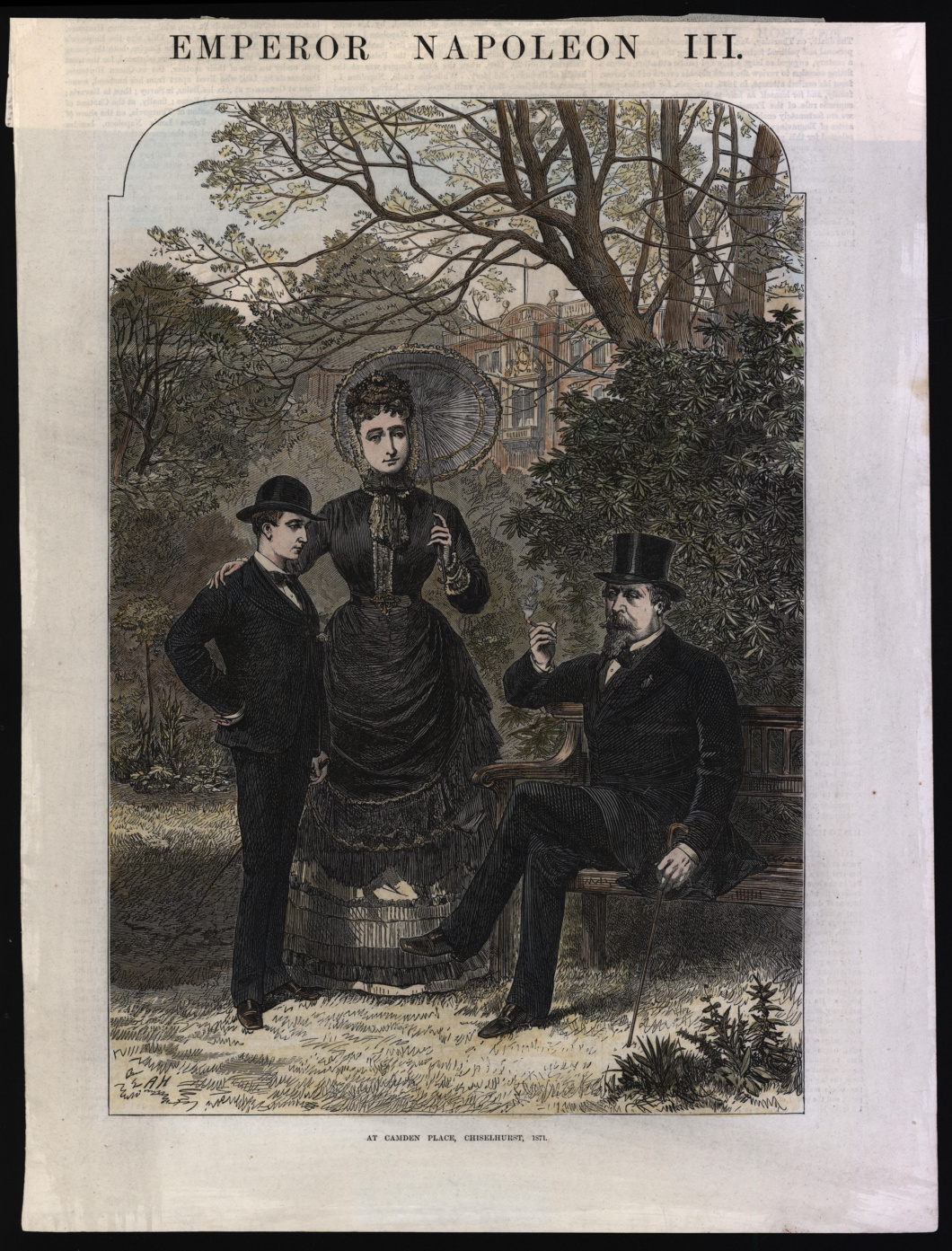
The Imperial Family in the grounds of Camden Place
The 1870's were a remarkable time in the story of both Camden Place and Chislehurst.
It is sometimes hard to believe that France’s first elected president and their last emperor lived and died at Camden Place.
It seems probable that Napoleon himself was behind the preparation of the house as a possible bolt hole for himself and the family should it ever be needed. Working through a long term contact and friend, Nathaniel Strode, Camden Place was bought in 1861 and transformed into something of a French château. Fixtures and fittings were of a much higher quality than might be expected if the house was simply to be a country residence for Strode himself. Gates from the Paris Exposition of 1866, panelling from the Château de Bercy and Flemish and French furniture and art were all put in place.
Strode recieved 900,000 francs from the French Civil list in 4 payments between in the early 1860s.
In ‘The Last love of the Emperor’ the memoirs of Napoleon’s last mistress, Louise de Mercy-Argenteau, she says she asked Napoleon before Sedan about money, he told her he had accounts in several countries in case of an exile and showed her a letter from Strode. This letter is quoted as saying
‘ Sire
I write to remind you that everything is ready at Camden Place to recieve your Imperial family.
I trust that the house you approved of 30 years ago will still be to your liking.
I am
Your Majesty’s respectful servant
Strode’

The James Stuart temple based on the Monument of Lysicrates
A French château in Chislehurst
By the time the Empress and Prince Imperial arrived in England Camden Place was ready for French royal guests.
It was fully furnished and Strode was quick to offer it to the Empress, initially for no rent but, at her insistence, a peppercorn rent was agreed. His initial attempt to join them at the house was politely rebuffed.
The first impressions of the house must have been bleak after the palaces of France but it seems the Prince Imperial was pleased to see the temple shaped folly in the grounds, reminiscent of one at St Cloud -which so reminded him of home.
He settled into village life quickly
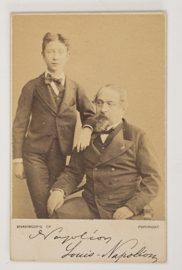
The Emperor was released from prison in March 1871 and quickly travelled to England. The Empress got news of his release from the station master Mr Lord and set off by special train to meet him at the coast.
Although his health was still poor, he was suffering from bladder stones, he seems to have settled into life at Chislehurst easily. He had of course, spent many years in exile in England , so knew it well.
He went up to town by train, travelling first class but refusing his right to a ‘special train’, He watched cricket matches, turned wood and walked to church with his wife. Pennies in his pockets assured he was popular with the local children and he employed spies to watch the French spies, stationed at the top of the windmill on the common. Politicians, clergy and royalty visited the house and Sundays in particular attracted other French exiles to Camden Place.
Politics was not off the agenda. There was clearly hope that there would be a third empire – possibly headed by the Prince Imperial when he came of age.
But the Prince was only 14 when he arrived in Chislehurst. Not surprisingly it took some time for him to settle into this remarkably different life. An attempt at an academic course failed but eventually he was enrolled as a cadet at Woolwich. His tutor Filon went with him to the academy at Woolwich.
The military life suited hm and he did very well.
Camden Place became home to the French Court in exile.
The Empress and Prince Imperial were not the only exiles to arrive in Chislehurst. Supporters and staff also fled Paris and joined her as the French court established a home in exile. Luckily one of the first to arrive was their chef!
Visitors also came to pay their respects, importantly Queen Victoria visited, though British politicians were reluctant to obviously support the Emperor over the new Republican government in Paris. There are photographs showing something of how the family lived in their new surroundings.
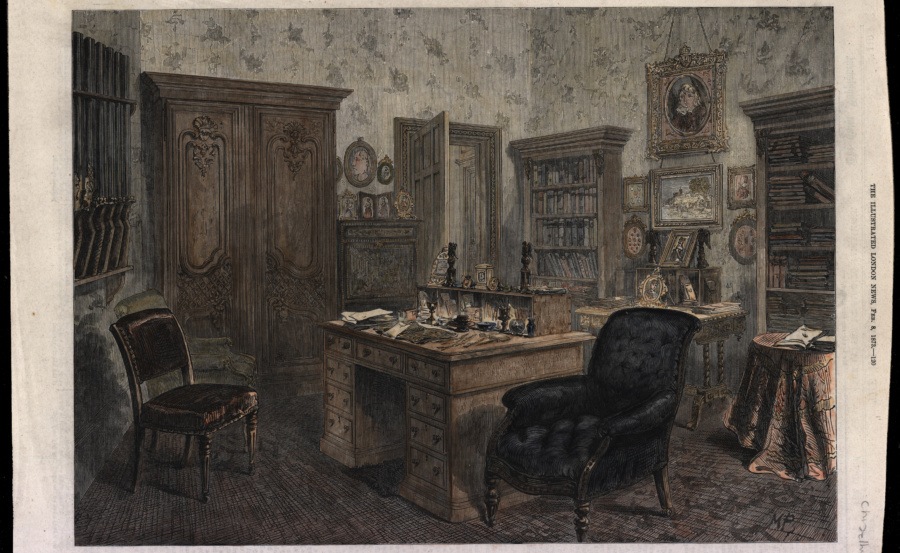
Napoleon's library

The picture gallery
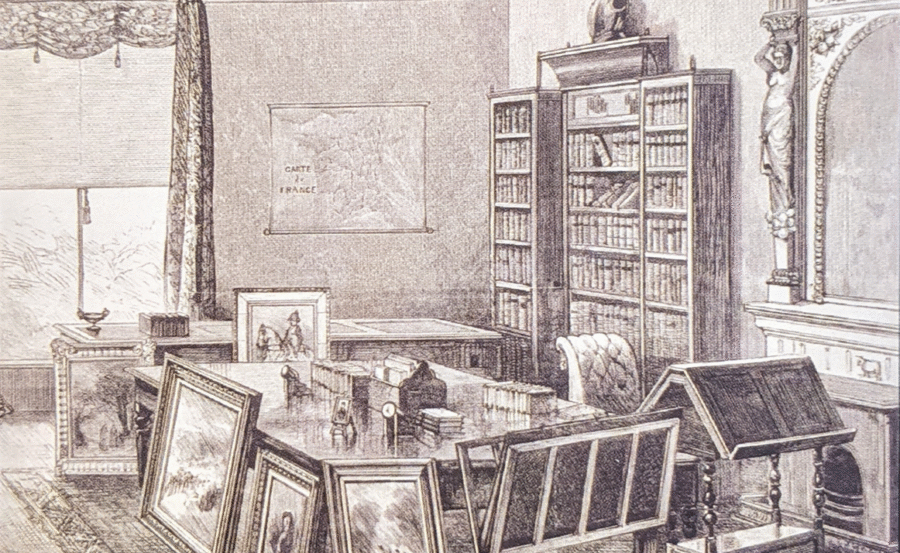
The Prince Imperial's study

The rar of Camden Place showing the rooms the Imperial family occupied

Napoleon lll only lived in Chislehurst for 20 months. On January 9th 1873 he died upstairs at Camden Place following a second unsuccessful surgery. This image of his bedroom shows the hospital bed where the surgery tookplace.
His funeral was a huge affair.
He came of age at Camden Place
The Prince Imperial was even more popular locally than his father. After his father’s death he continued his studies at Woolwich, graduating 5th in his group, from this point he is now called Napoleon and signs himself as such.
He celebrated his 18th birthday at Camden Place with some 3,000 guests from France and England and once he had reached his majority he was often addressed as Napoleon lV.
Determined to only return to France when the French people wanted it, he was anxious to build his profile with the French people and for a Bonaparte that meant success on the battlefield.
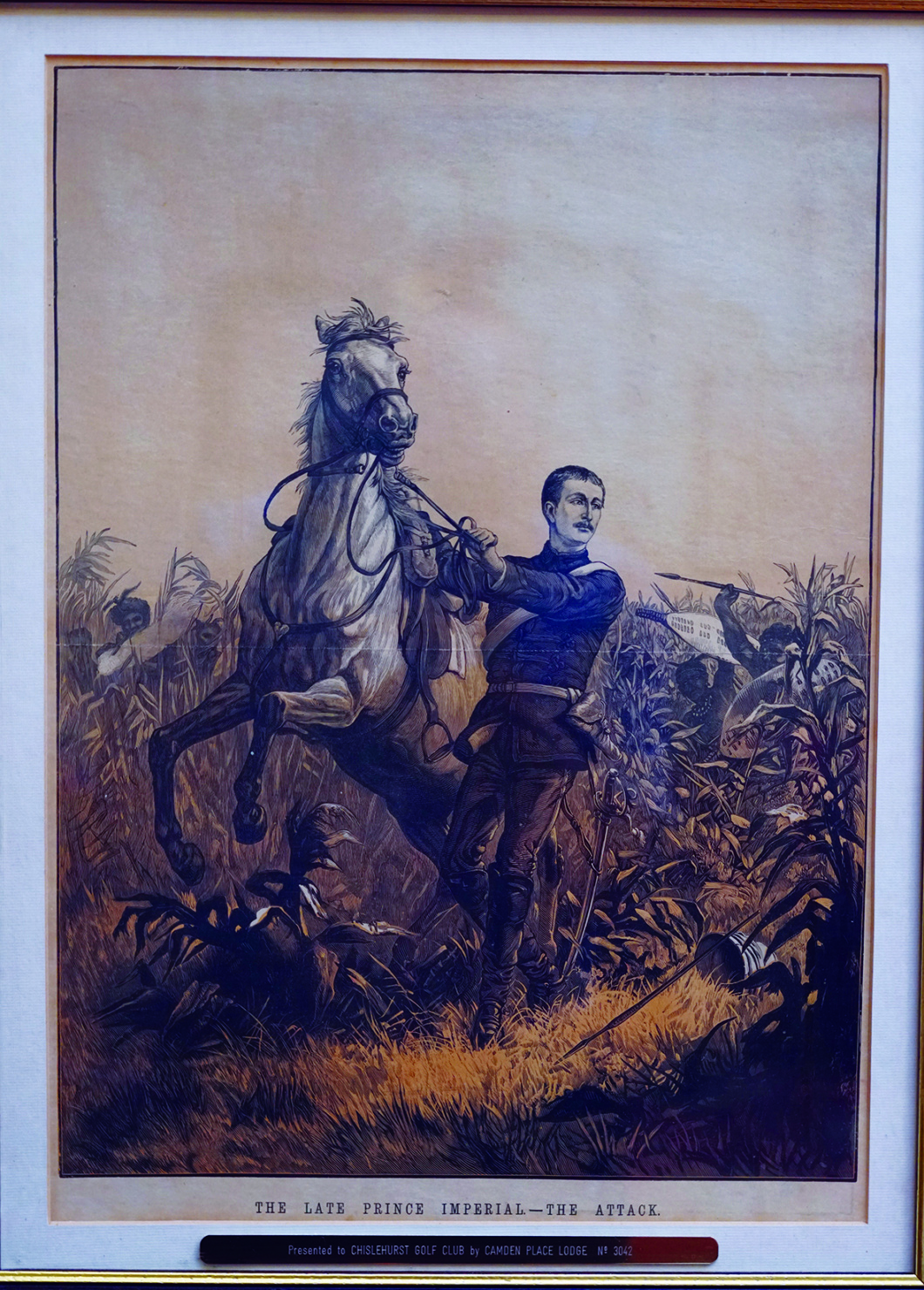
When his old classmates were being sent to South Africa to take part in the Zulu Wars the Prince begged for permission to join them.
Eventually it was agreed he should go as an observer, It was on a reconnaissance mission that the small group were surprised by a war party of 40 Zulu’s. The Prince failed to escape with the others because his saddle broke. He fought bravely. The next day his body was recovered and returned to England. The Empress had to arrange a second Imperial funeral from Camden Place.

After Napoleon’s death Eugénie had a small side chapel built at the local Catholic church, St Mary’s. After her son’s demise she wanted to build a more substantial mausoleum. The only land near the church belonged to a Protestant farmer who refused to sell it for a Catholic building.
Eventually, Eugénie found a property in Farnborough Hampshire. She moved there in 1881 and built an Abbey. The Imperial remains were moved in 1888.
Her home is now a Catholic girls school but it is possible to arrange visits. https://www.farnborough-hill.org/join-us/visit-us

This book about the Prince Imperial starts with a description of the Empress’s pilgrimage to South Africa on the first anniversary of his death.
Discover Camden Place’s unique history through the people and events that shaped its story that spans more than 400 years.
